
Introduction
Events require effective communication. Whether the event is a conference, workshop, networking session, cultural program, business gathering, seminar, or community activity, attendees need quick and clear access to important information. A well-designed event website can act as a central destination where visitors can discover the event, understand what to expect, register their participation, and find the necessary contact information.
CnEL India worked on a website development project focused on creating a simple, responsive, and user-friendly website for an event. The objective was to provide visitors with an attractive digital experience while keeping the website easy to navigate and focused on the most important event information.
The website needed to include a homepage, event details, registration functionality, and a contact section. Along with these core requirements, the project emphasized clean design, smooth navigation, responsiveness, and usability across different devices.
The project demonstrated how a relatively simple website can be designed strategically to support event promotion and attendee registration without unnecessary complexity.
Project Background
The client required a dedicated website for an upcoming event. The website needed to provide visitors with all the essential information they would need before deciding to attend.
Instead of creating a website overloaded with unnecessary pages and features, the project focused on a clear and structured experience.
The main sections included:
- Homepage
- Event details
- Registration page
- Contact section
Each section had a specific purpose.
The homepage needed to introduce the event and immediately communicate its value. The event details section needed to provide complete information about the event. The registration page needed to make participation easy. The contact section needed to give visitors a straightforward way to reach the organizers.
The overall goal was to make the website informative, visually appealing, and easy to use.
Understanding the Event Requirements
The first stage of the project involved understanding the event and its communication requirements.
An event website is different from a general business website because visitors usually arrive with a specific purpose. They want to know what the event is, when and where it will happen, why they should attend, and how they can register.
Therefore, the website structure needed to answer these questions quickly.
CnEL India’s approach focused on organizing information according to the visitor journey.
A typical visitor experience could follow this sequence:
Discover the event → Understand the event → Review important details → Decide to attend → Register → Contact organizers if required
Designing the website around this journey helped create a more natural user experience.
Homepage Development
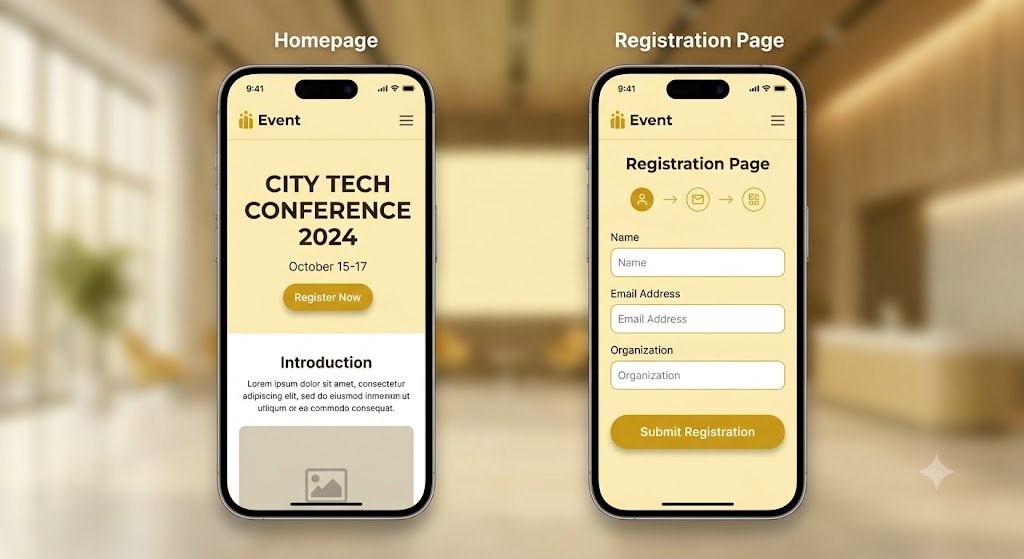
The homepage was designed as the primary introduction to the event.
The first impression of an event website is important because visitors often decide within a short period whether the event is relevant to them.
The homepage therefore needed to communicate the event’s identity clearly.
Important information could include:
- Event name
- Short introduction
- Event date
- Location or venue
- Key highlights
- Registration call-to-action
- Important announcements
- Brief overview of the event
The layout was designed to keep the most important information visible and easy to understand.
Rather than overwhelming visitors with large amounts of text, the content was organized into clear sections.
A strong call-to-action encouraged visitors to move from learning about the event to registering for it.
Event Details Section
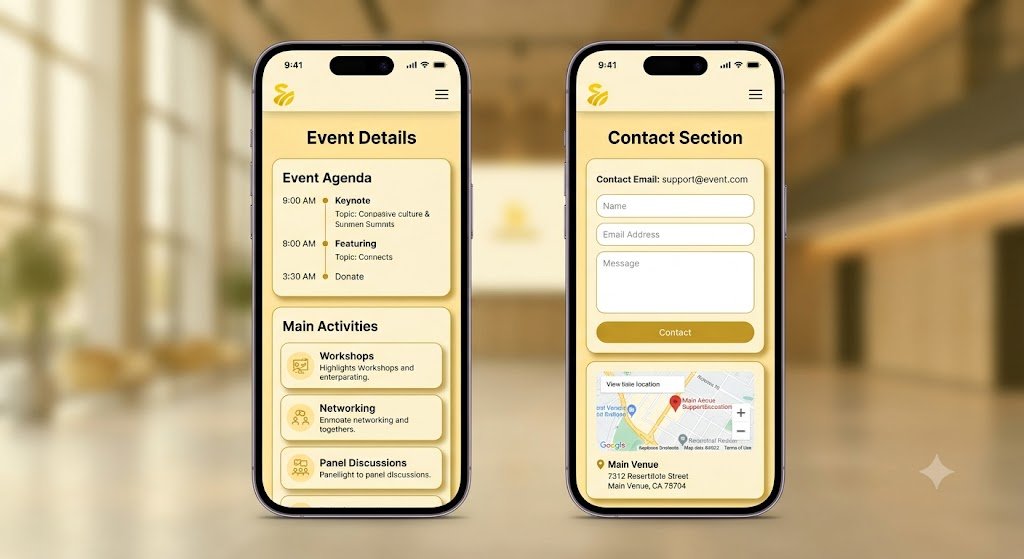
The event details section served as the information center of the website.
Visitors needed access to complete and accurate information before registration.
The section could include details such as:
- Event date
- Event time
- Venue
- Event agenda
- Main activities
- Event highlights
- Participation information
- Important instructions
- Other relevant announcements
The information was organized logically so visitors could find what they needed without searching through multiple pages.
Clear headings and structured content helped improve readability.
For an event website, information clarity is especially important because visitors may access the site shortly before the event while traveling or making final arrangements.
Registration Page
Registration was one of the most important components of the website.
The purpose of the registration page was to provide visitors with a straightforward way to confirm their participation.
A registration process should not feel complicated. Excessive fields, unclear instructions, or confusing navigation can cause visitors to abandon the process.
CnEL India’s approach focused on keeping registration simple and user-friendly.
The registration experience could collect essential information such as:
- Name
- Contact information
- Email address
- Participation details
- Other event-specific information
The form structure was designed to be easy to understand.
Clear labels and logical field ordering helped visitors complete the registration process with minimal effort.
Validation and confirmation messaging were also important considerations so that users could understand whether their registration had been successfully submitted.
Contact Section
The contact section provided visitors with a direct way to communicate with event organizers.
Although many visitors may find all the information they need on the website, questions can still arise.
The contact section could include:
- Organizer information
- Email contact
- Phone contact
- Venue information
- Contact form
- Additional communication details
The objective was to make support easily accessible without distracting users from the main event information.
A simple contact experience can improve visitor confidence and make the event organization appear more professional.
Clean and Modern Design
The client specifically required a clean design.
For an event website, visual presentation plays an important role because the design should create excitement while still maintaining clarity.
CnEL India focused on creating a balanced visual structure.
The design approach emphasized:
- Clear sections
- Consistent spacing
- Easy-to-read content
- Strong visual hierarchy
- Attractive event presentation
- Clearly visible actions
- Consistent navigation
The website needed to look polished without becoming unnecessarily complicated.
A clean design also makes it easier for organizers to update event information in the future.
Smooth Navigation
Navigation was another key requirement.
Visitors should be able to move between the homepage, event information, registration area, and contact section without confusion.
The navigation structure was designed to remain simple and predictable.
Important sections could be accessed directly through the main navigation, while prominent calls-to-action guided users toward registration.
Smooth navigation reduces friction and allows visitors to focus on the event rather than figuring out how to use the website.
Mobile-Friendly Experience
A significant portion of website visitors may access event information from smartphones.
People often search for event details while traveling, sharing event information with friends, or preparing to attend.
Therefore, mobile responsiveness was an important part of the project.
CnEL India focused on ensuring that the website adapted appropriately to different screen sizes.
The mobile experience considered:
- Navigation
- Text readability
- Button sizes
- Registration forms
- Event information
- Images and visual elements
- Contact information
- Page spacing
The goal was to ensure that visitors could comfortably browse and register from mobile devices without needing to zoom or scroll excessively.
User Experience
The website was designed around the needs of the event attendee.
A good user experience means that visitors should be able to answer their questions quickly.
The website needed to make the following information easy to find:
What is the event?
When is it happening?
Where is it happening?
Why should I attend?
How can I register?
How can I contact the organizers?
By organizing the website around these questions, the development process remained focused on practical usability.
Registration Journey Optimization
The registration journey was treated as an important part of the overall user experience.
A visitor who has decided to attend should not encounter unnecessary barriers.
The journey therefore needed to be straightforward:
Event Information → Registration → Form Completion → Confirmation
Clear instructions helped reduce confusion.
The registration action was also made visible from important areas of the website so that visitors did not have to search for it after deciding to participate.
This approach can help improve the percentage of visitors who move from simply viewing the event to completing registration.
Content Organization
Content organization was important because event websites can contain large amounts of information.
Without proper structure, even useful information can become difficult to understand.
CnEL India focused on presenting information in smaller, meaningful sections.
For example, instead of placing all event information in one long paragraph, details could be separated into:
- Overview
- Schedule
- Venue
- Highlights
- Registration
- Contact
This structure improves scanning and allows visitors to quickly locate relevant information.
Performance and Accessibility Considerations
A polished event website should also provide a smooth browsing experience.
The development process considered factors such as page loading, responsive layouts, readable content, and predictable interactions.
Visitors may access the website from different internet connections and devices, so unnecessary complexity should be avoided.
Accessibility considerations also help create a better experience for a wider range of users.
Readable text, clear labels, logical navigation, and properly structured content can make the website easier to use.
Testing and Quality Assurance
Testing was an important stage of the project.
Since the website contained registration and contact functionality, every major interaction needed to be checked.
Testing focused on:
- Homepage display
- Navigation
- Event information
- Registration form
- Form validation
- Registration confirmation
- Contact section
- Mobile layouts
- Different screen sizes
- Buttons and links
- Overall user flow
The website was reviewed from the perspective of an actual visitor.
The objective was to identify anything that could create confusion or prevent users from completing important actions.
Cross-Device Testing
Because responsiveness was one of the main project requirements, the website needed to be reviewed across different screen sizes.
The same content should remain usable whether the visitor is using a desktop computer, laptop, tablet, or smartphone.
This required checking:
- Navigation behavior
- Section layouts
- Registration forms
- Text wrapping
- Button placement
- Images
- Spacing
- Contact information
Cross-device testing helped ensure that the website delivered a consistent experience.
Challenges
One of the primary challenges was balancing simplicity with completeness.
An event website needs enough information to answer visitor questions, but too much information can make the website difficult to navigate.
Another challenge was creating a design that was visually attractive while keeping the registration process simple.
Mobile responsiveness was also important because the website needed to function naturally across different screen sizes.
Finally, the website needed to guide visitors toward registration without making the design feel overly promotional or complicated.
CnEL India’s Approach
CnEL India follows a user-focused approach to event website development.
The process begins with understanding the event, its audience, and its goals.
The website structure is then planned around the visitor journey.
The overall approach can be summarized as:
Requirement Analysis → Website Structure → UI Design → Development → Responsive Optimization → Testing → Final Delivery
This process helps ensure that every section of the website has a clear purpose.
Rather than adding unnecessary functionality, the focus remains on creating a website that is useful, attractive, responsive, and easy to maintain.
Business Value
A professional event website can provide significant value to event organizers.
It creates a centralized source of information and reduces the need to repeatedly answer basic questions through separate communication channels.
It can also improve event visibility, simplify registration, provide contact access, and create a stronger digital presence.
A well-designed website can help transform event visitors into registered participants by making the journey from discovery to registration easier.
The mobile-friendly design also allows organizers to reach visitors who primarily use smartphones.
Future Scalability
Although the initial project focused on a simple event website, the structure can provide a foundation for future improvements.
Depending on future requirements, an event website can later be expanded with additional sections such as speaker information, event schedules, photo galleries, announcements, attendee resources, feedback forms, or other event-specific functionality.
Starting with a clean and well-structured foundation makes future expansion easier.
Conclusion
This event website project demonstrates how a focused digital experience can support event promotion and attendee engagement.
The objective was not to create an unnecessarily complex website, but to build a clean, responsive, and user-friendly platform where visitors could quickly understand the event, review important information, register their participation, and contact the organizers.
CnEL India’s approach focused on clear structure, smooth navigation, responsive design, simple registration, and thorough testing.
By organizing the website around the needs of event attendees, the project created a practical digital destination for the event.
The final approach provides a strong foundation for event organizers who want a professional online presence while keeping the experience simple for visitors.
A well-designed event website ultimately serves as more than an information page. It becomes an important part of the attendee journey—from discovering the event to completing registration and preparing to participate.