
In today’s digital ecosystem, account security has become a fundamental requirement rather than an optional feature. As businesses scale and users interact across multiple platforms, the risk of unauthorized access, data breaches, and identity misuse continues to grow. Traditional password-based systems are no longer sufficient to ensure protection.
Our client faced a similar challenge. Despite having a growing user base, their platform lacked a robust secondary authentication layer. This exposed users to potential security risks while also affecting overall trust in the platform. Previous attempts to introduce additional verification steps had failed due to poor user adoption and complicated workflows.
The client needed more than just a security upgrade. They needed a solution that users would willingly adopt—something secure, yet effortless.
This is where CnEl India Private Limited stepped in.
Understanding the Real Problem
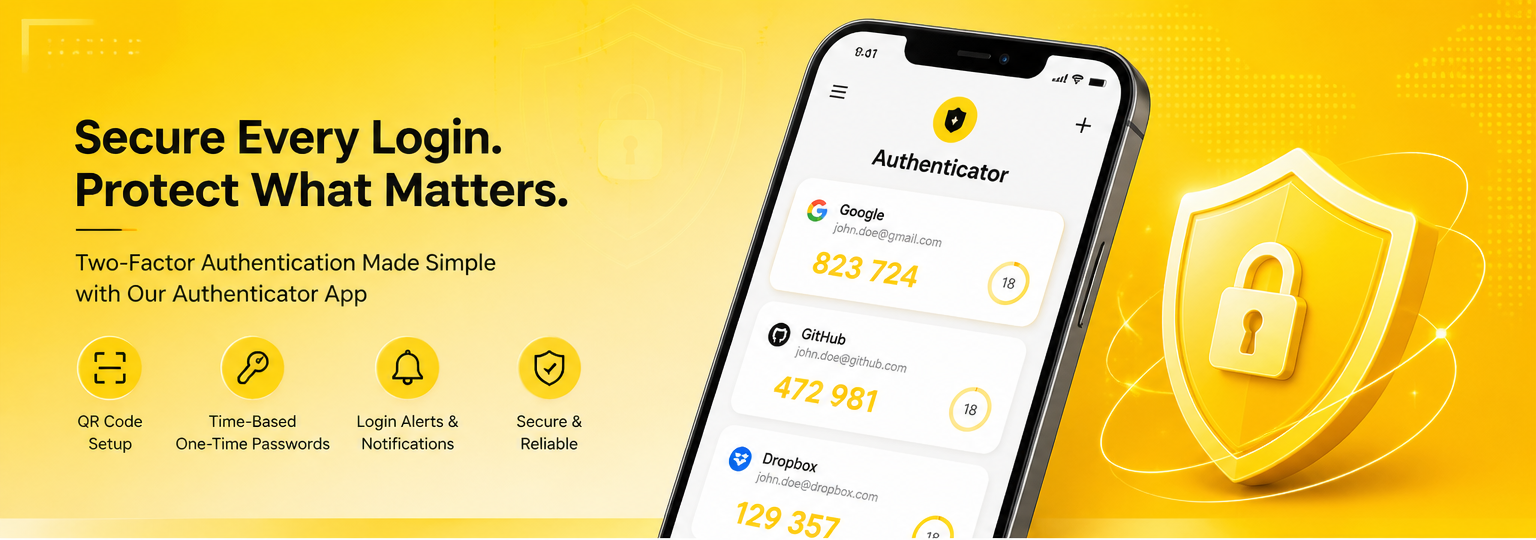
At first glance, the requirement seemed straightforward: build an authenticator application that supports two-factor authentication, QR-based setup, and real-time alerts.
However, during our initial analysis, we identified a deeper issue.
The challenge was not just technical—it was behavioral.
Users generally resist security mechanisms that:
- Add friction to login processes
- Require manual configuration
- Feel complex or time-consuming
- Interrupt their normal workflow
In simple terms, the client’s earlier approach failed because it focused on adding security, not improving user experience.
Our objective became clear:
Design a security system that integrates seamlessly into user behavior rather than disrupting it.
Our Approach: Security Without Friction
Instead of building a feature-heavy application, we focused on creating a product that felt intuitive, fast, and reliable.
We followed three guiding principles:
- Make onboarding effortless
- Ensure accuracy without compromise
- Deliver a clean and distraction-free experience
This approach allowed us to build a system that users could trust and adopt without hesitation.
Creating a Seamless User Journey
The first step was rethinking how users interact with an authenticator application.
We designed the experience so that a new user could understand and start using the app within seconds—without technical guidance.
The interface was kept minimal and structured. All essential information was visible immediately, eliminating confusion and unnecessary navigation.
Instead of overwhelming users with multiple options, we prioritized clarity and simplicity.
Simplifying Account Setup
One of the biggest barriers to adoption in authentication systems is the setup process.
Traditionally, users are required to manually enter keys or follow multi-step instructions, which often leads to errors and frustration.
We eliminated this friction by introducing a quick scanning mechanism for account setup.
Users could simply scan a code provided by the platform, and the account would be added instantly.
This reduced setup time significantly and removed the possibility of manual errors.
As a result, onboarding became fast, intuitive, and reliable.
Ensuring Accurate and Reliable Code Generation
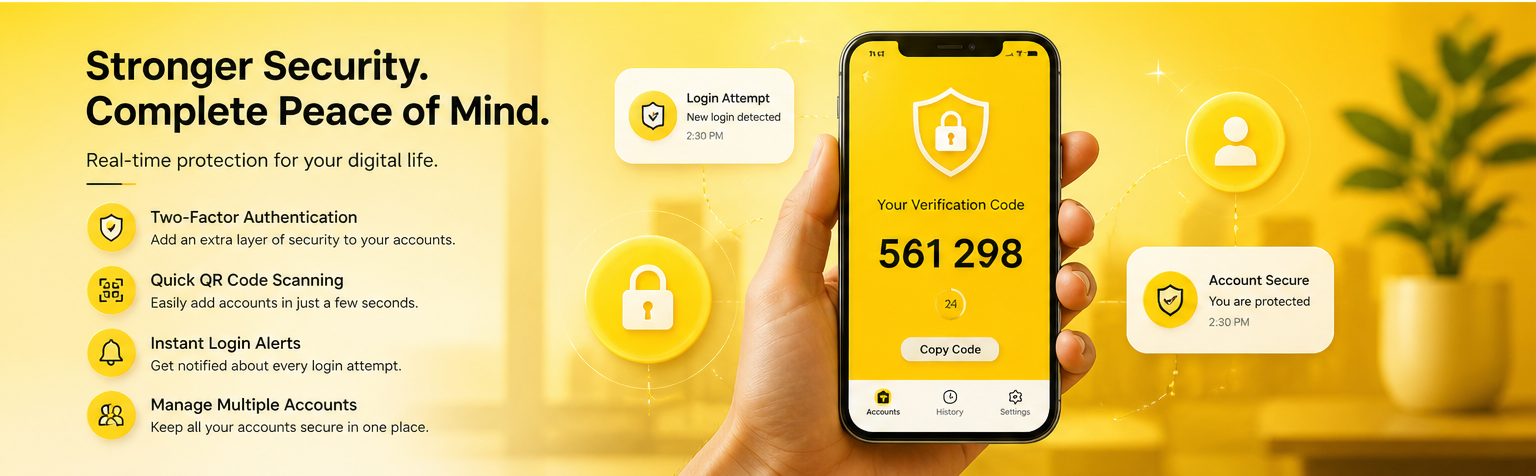
The core functionality of any authenticator lies in generating time-based verification codes.
This part of the system required absolute precision.
We designed the mechanism to ensure that:
- Codes are generated accurately in real time
- Each code refreshes automatically at fixed intervals
- Expired codes are replaced instantly
- Synchronization remains consistent across all connected platforms
Even a minor mismatch in timing or logic could lead to authentication failures. Therefore, this component underwent extensive validation to ensure flawless performance.
Managing Multiple Accounts with Clarity
Modern users typically manage multiple accounts across different platforms.
A poorly designed system can quickly become cluttered and confusing.
To address this, we created a structured account management interface where users could:
- View all accounts in a single organized layout
- Identify accounts easily without confusion
- Switch between accounts smoothly
- Remove or update accounts when required
The goal was to maintain clarity, even as the number of accounts increased.
Real-Time Login Awareness
Another critical enhancement was introducing real-time login alerts.
Whenever a login attempt occurred, the user would receive an immediate notification.
This feature added a new layer of transparency and control.
Users were no longer dependent on assumptions—they were actively informed about activity related to their accounts.
This significantly improved user confidence and helped detect suspicious behavior early.
Designing for Performance and Speed
Security applications often become slow due to background processing and encryption mechanisms.
However, performance directly impacts user adoption.
We optimized the application to ensure:
- Instant loading
- Smooth transitions
- Quick code refresh cycles
- Minimal delay in user interaction
The application was designed to feel lightweight and responsive, even under continuous usage.
Strengthening Data Protection
Since the application handled sensitive authentication data, security at the storage level was critical.
We implemented strong safeguards to ensure that:
- User data remains protected within the device
- Sensitive information is not exposed externally
- Unauthorized access is prevented
- Data integrity is maintained at all times
These measures ensured that the application met high security standards without affecting usability.
Impact After Deployment
The results of the implementation were both immediate and measurable.
Users who previously avoided additional security steps began actively using the application.
Login security improved significantly, reducing the risk of unauthorized access.
Support requests related to login issues decreased, as the system became more reliable and easier to use.
Most importantly, user trust increased.
The platform was now perceived as secure, professional, and user-focused.
Key Takeaway
This project reinforced a critical insight:
Security systems succeed not only because they are strong—but because they are usable.
Many organizations invest heavily in security technologies but fail to consider how users interact with them.
If a system is difficult to use, users will bypass it, reducing its effectiveness.
By focusing equally on security and user experience, we were able to create a solution that delivered both protection and adoption.
Conclusion
Through a carefully designed approach, CnEl India Private Limited transformed a complex security requirement into a simple and effective user experience.
The authenticator application not only strengthened account protection but also improved user confidence and engagement.
This case study demonstrates that the most successful solutions are not those with the most features—but those that solve real problems in a simple, reliable, and user-friendly way.
Because in the end, true security is not just about technology.
It is about trust—and trust is built through experience.