
Project Overview
In the competitive direct-to-consumer (DTC) e-commerce market, video advertising plays an important role in attracting potential customers, communicating product benefits, and generating online sales. Beauty brands, in particular, need engaging and visually appealing advertisements that quickly capture attention and build trust with their target audience.
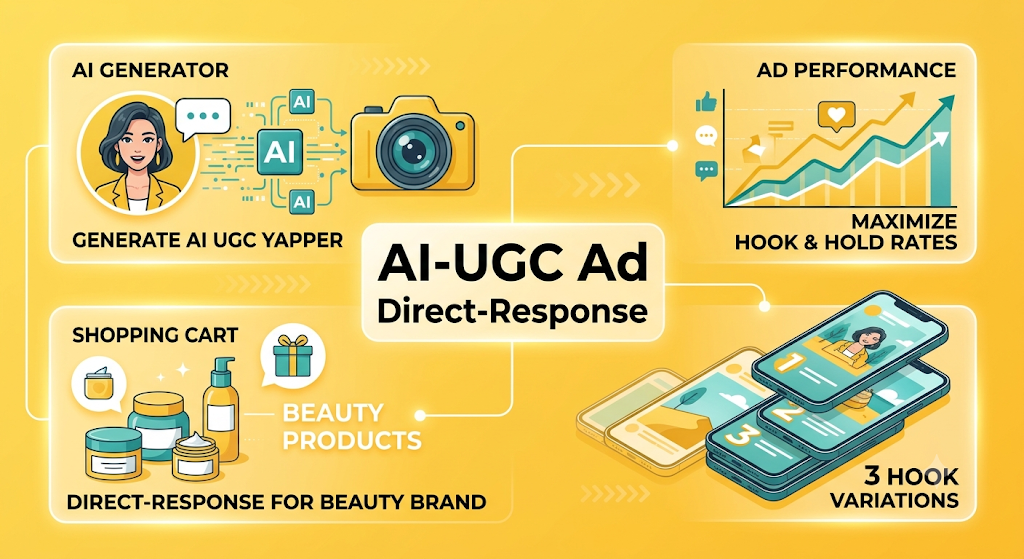
CnEL India explored a video advertising project focused on creating AI-powered User-Generated Content (UGC) advertisements for a Shopify-based beauty brand. The primary objective was to produce high-quality, direct-response video ads suitable for paid social media campaigns, especially Meta advertising.
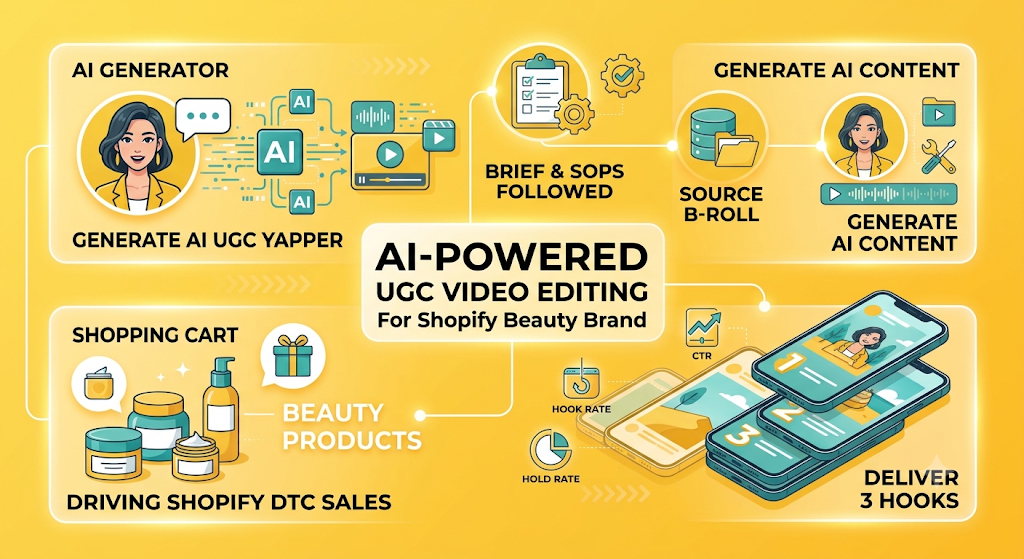
The project required a combination of AI-generated presenter-style content, carefully selected organic footage, engaging hooks, and professional editing. The videos needed to feel natural and relatable while maintaining the polished appearance expected from a growing e-commerce brand.
The initial assignment was designed as a paid trial project involving one video of approximately one to two minutes. The final deliverable included three different hook variations, allowing the brand to test multiple opening approaches and identify which version attracted the strongest audience response.
The project also presented an opportunity for ongoing collaboration, with the possibility of regular video production, monthly creative support, and performance-based incentives.
Understanding the Business Requirements
The beauty brand needed an editor who understood more than basic video editing. The requirement was to create advertisements that could support actual marketing objectives rather than simply produce visually attractive content.
The videos needed to communicate product-related messages quickly, maintain audience attention, and encourage viewers to take action.
The key requirements included:
- Creating AI-generated UGC-style advertisements.
- Combining generated presenter content with existing organic B-roll footage.
- Producing three alternative hooks for the same video concept.
- Maintaining a natural, authentic, and engaging presentation style.
- Following the supplied creative instructions and production guidelines.
- Delivering the completed video within one to two days.
- Ensuring the final advertisement was suitable for paid social media campaigns.
- Maintaining consistent branding and messaging across all video variations.
The client also emphasized strict adherence to the supplied Standard Operating Procedures (SOPs). Every instruction, reference, and production requirement needed to be followed carefully. The quality of the final work would be evaluated alongside submissions from other editors working from the same brief.
This made accuracy, consistency, and attention to detail essential parts of the project.
AI-Powered UGC Advertisement Creation
One of the central elements of the project was the creation of AI-powered UGC-style advertisements.
UGC-style advertising is designed to resemble authentic content created by everyday users rather than traditional studio-produced commercials. This format can make promotional messages feel more relatable and conversational.
For the beauty brand, the objective was to create a presenter-led advertisement that could communicate product information in a natural and engaging way.
The AI-generated presenter content needed to maintain a realistic appearance, clear delivery, and suitable expressions. The overall presentation had to match the brand’s communication style and the expectations of its target audience.
The editing process involved bringing together the generated presenter footage and the existing organic B-roll material. The footage needed to be arranged in a logical sequence so that the visuals supported the spoken message.
Instead of making the advertisement feel heavily produced, the editing approach focused on creating a smooth and natural viewing experience.
Important considerations included:
- Maintaining realistic presenter visuals.
- Matching the presenter content with relevant product footage.
- Keeping the message clear and easy to understand.
- Avoiding unnecessary visual effects.
- Maintaining consistent pacing throughout the video.
- Making sure every scene contributed to the overall advertisement.
The goal was to create a video that looked like engaging social media content while still meeting the quality standards of a professional paid advertisement.
Organic B-Roll Selection and Integration
B-roll footage plays an important role in making video advertisements more interesting and visually informative. It helps illustrate the message, show product-related activities, and prevent the advertisement from becoming visually repetitive.
The client had already arranged and categorized a collection of organic B-roll footage for the initial trial. This provided a starting point for the editing process.
However, selecting the right footage remained an important responsibility. Every clip needed to be relevant to the message being communicated at that particular moment.
For a beauty-focused e-commerce advertisement, suitable visuals could include product demonstrations, application routines, close-up product shots, lifestyle scenes, packaging details, and other relevant beauty-related activities.
The editing approach focused on matching footage with the advertisement’s narrative rather than inserting clips simply to fill empty space.
Key activities included:
- Reviewing the available footage.
- Identifying clips that matched the product and message.
- Selecting visually relevant scenes.
- Arranging clips according to the advertisement’s flow.
- Maintaining smooth transitions between presenter footage and B-roll.
- Removing unnecessary or repetitive visuals.
- Ensuring that the footage supported the product’s value proposition.
The client also expected the ability to identify and source additional high-quality organic footage when required for future campaigns. This ability would help maintain creative variety and support the development of new advertising concepts.
Creating Three Hook Variations
One of the most important deliverables was the creation of three different hook variations for a single advertisement.
A hook is the opening section of a video that captures the viewer’s attention. In paid social media advertising, the first few seconds can strongly influence whether someone continues watching or scrolls past the advertisement.
For this reason, the client specifically highlighted the importance of understanding hook performance.
Rather than creating three completely separate advertisements, the requirement was to develop three alternative openings that could be tested with the main video content.
Each variation could use a different opening statement, visual introduction, or presentation approach while maintaining the same central product message.
The objective was to give the brand multiple creative options without unnecessarily increasing the production workload.
The three variations needed to be:
- Hook Variation One: An opening designed to immediately attract attention through a relevant problem or relatable situation.
- Hook Variation Two: An alternative introduction focused on curiosity and encouraging viewers to learn more.
- Hook Variation Three: A different opening approach highlighting a product-related benefit or an engaging customer perspective.
The remaining advertisement would follow a consistent structure wherever appropriate.
This approach made it easier for the marketing team to compare different opening styles and understand which message connected most effectively with potential customers.
Direct-Response Advertising Strategy
The project was not limited to producing attractive video content. Its main purpose was to support direct-response advertising.
Direct-response advertising encourages viewers to take a specific action, such as visiting a product page, learning more about an offer, or making a purchase.
For a Shopify DTC beauty brand, the video needed to communicate the product’s value clearly and guide the viewer towards the next step.
The editing process therefore needed to consider the complete customer journey.
The advertisement had to capture attention, maintain interest, communicate relevant information, and finish with a clear call to action.
Several creative elements were important:
Strong opening: The first few seconds needed to establish a reason for viewers to continue watching.
Clear messaging: Product information and benefits needed to be communicated in simple, understandable language.
Relevant visuals: Every visual element needed to support the message and maintain audience interest.
Consistent pacing: The advertisement needed to move naturally without unnecessary pauses or distracting transitions.
Clear call to action: The ending needed to guide interested viewers towards the intended next step.
By combining these elements, the advertisement could serve as a marketing asset designed around measurable business objectives.
Understanding Important Advertising Performance Metrics
The client specifically required an understanding of key advertising performance metrics. This was important because successful video editing for paid campaigns involves more than creative quality.
The performance of an advertisement can provide valuable information about how viewers respond to its content.
Three important metrics highlighted in the brief were hook rate, hold rate, and click-through rate (CTR).
1. Hook Rate
Hook rate helps evaluate how effectively the opening section of a video captures attention.
A stronger opening can encourage more viewers to stop scrolling and watch the advertisement.
The three hook variations were intended to provide different creative approaches that could be compared during campaign testing.
2. Hold Rate
Hold rate helps assess how effectively the advertisement maintains viewer attention after the initial opening.
A video may have an attractive hook, but if the following content is confusing, repetitive, or poorly paced, viewers may stop watching.
This makes storytelling, scene selection, message clarity, and editing rhythm important throughout the advertisement.
3. Click-Through Rate (CTR)
Click-through rate measures how frequently viewers click on an advertisement after seeing it.
For an e-commerce business, this metric can help indicate whether the advertisement’s message and presentation encourage people to explore the product further.
The creative team needs to understand that different hooks, product messages, and calls to action may influence audience responses differently.
These metrics help connect creative decisions with marketing outcomes and provide direction for future video improvements.
Following SOPs and Maintaining Quality Standards
A major requirement of this project was strict compliance with the client’s SOPs and instructions.
The client provided a detailed project brief, written procedures, recorded demonstrations, creative prompts, and reference advertisements.
These materials were intended to establish a consistent production process and reduce differences between individual editors’ outputs.
Following the instructions accurately was essential because the trial submission would be compared with work from several other editors who had received the same brief.
The quality control process therefore needed to cover more than the final appearance of the video.
Important checks included:
- Reviewing the complete project brief before starting.
- Understanding the required video structure.
- Following the provided creative instructions.
- Using the correct source footage and references.
- Checking the three hook variations.
- Maintaining the required video length.
- Reviewing audio and visual consistency.
- Confirming that the final file met the delivery requirements.
- Completing a final review before submission.
This structured approach helped reduce avoidable errors and ensured that the final output remained aligned with the client’s expectations.
Fast Turnaround and Production Management
The client required the initial video to be completed within one to two days.
This short turnaround made planning and production efficiency important.
The editing process needed to be organized so that time was not wasted on unnecessary revisions or repeated work.
A structured workflow could include reviewing the instructions, organizing the footage, preparing the AI-generated presenter content, assembling the advertisement, creating the alternative hooks, and completing the final quality check.
The initial paid trial budget was $30 for one video of approximately one to two minutes.
Although the trial was limited in scope, it was intended to evaluate the editor’s creative ability, technical quality, speed, communication, and consistency in following instructions.
The client was also looking for someone with high availability who could manage regular creative requirements as the brand continued scaling its advertising campaigns.
This meant the ability to deliver consistently under tight deadlines was an important part of the overall project requirement.
Long-Term Creative Support for a Growing E-Commerce Brand
Beyond the initial trial, the project offered the possibility of a long-term working relationship.
The brand reported monthly Meta advertising expenditure of approximately $60,000 and was looking to scale its campaigns quickly.
As advertising activity increases, brands need a continuous supply of creative content to test different messages, product benefits, hooks, and presentation styles.
The long-term requirement could include:
- Regular AI-powered UGC advertisements.
- AI voiceover-based promotional videos.
- Different video lengths and creative formats.
- Multiple hook and opening variations.
- Product-focused advertising content.
- Lifestyle and demonstration-based videos.
- Creative revisions based on campaign feedback.
- New advertising concepts for future campaigns.
The client also mentioned the possibility of a generous monthly retainer and performance-based bonuses for selected long-term collaborators.
This highlighted the importance of building a repeatable creative production process rather than treating each advertisement as an isolated task.
Challenges and Key Considerations
The project involved several important challenges that required careful planning.
Maintaining Authenticity: AI-generated presenter content needed to feel natural and suitable for a UGC-style advertisement. An overly artificial appearance could reduce audience trust and engagement.
Selecting Relevant Footage: B-roll needed to match the product message and maintain visual continuity. Irrelevant footage could distract viewers and weaken the advertisement.
Creating Effective Hooks: Three variations needed to offer genuinely different opening approaches rather than minor changes that provided little testing value.
Maintaining Audience Attention: The advertisement needed consistent pacing and clear storytelling to encourage viewers to continue watching.
Following Detailed Instructions: Strict SOP compliance was essential because the client evaluated submissions against the same project requirements.
Meeting Short Deadlines: The one-to-two-day delivery expectation required an organized workflow and efficient communication.
Connecting Creativity with Performance: The final video needed to support measurable advertising objectives, not simply look attractive.
Addressing these challenges required a combination of creative judgment, structured editing, AI content understanding, and attention to marketing performance.
CnEL India’s Approach
CnEL India approaches AI-powered video advertising with a focus on combining creative execution and business objectives.
For projects like this, the process begins with understanding the brand, target audience, product message, and intended advertising outcome.
The next step is to organize the available content and plan how the advertisement should communicate its message. AI-generated presenter content, organic footage, and product visuals are then combined into a clear and engaging video.
Multiple hook variations can be developed to support creative testing, while the remaining video structure maintains consistent product messaging.
Before delivery, the video is reviewed for visual quality, audio consistency, pacing, branding, instruction compliance, and overall message clarity.
The approach also considers campaign feedback. When performance information is available, it can help identify which creative elements should be improved in future advertisements.
This makes video production a continuous improvement process rather than a one-time editing activity.
Expected Business Benefits
A structured AI-powered UGC video production process can provide several advantages to a growing Shopify beauty brand.
Faster Creative Production: AI-assisted content creation and an organized editing workflow can help produce advertising videos more efficiently.
Multiple Testing Opportunities: Three hook variations provide different opening approaches for campaign testing.
Better Audience Engagement: Natural presenter content, relevant visuals, and effective pacing can help make advertisements more engaging.
Consistent Brand Communication: A structured production process helps maintain a consistent visual and messaging style across campaigns.
Improved Creative Flexibility: Different video lengths, formats, and advertising concepts can be developed to support changing campaign requirements.
Performance-Oriented Content: Understanding hook rate, hold rate, and CTR helps connect creative decisions with measurable advertising results.
Scalable Production: A repeatable workflow can support the ongoing creative requirements of a brand increasing its advertising activity.
Conclusion
The AI UGC Meta Ads Video Editing project demonstrates how AI-powered content creation and professional video editing can support the advertising requirements of a growing Shopify DTC beauty brand.
The project combined realistic presenter-style content, organic B-roll footage, three alternative hooks, direct-response storytelling, and strict production guidelines to create advertising videos designed for paid social media campaigns.
It also highlighted the importance of understanding advertising performance metrics, maintaining audience attention, following creative instructions, and delivering high-quality content within short deadlines.
For CnEL India, this project represents an opportunity to support e-commerce businesses with creative video production processes that combine AI capabilities, engaging storytelling, and performance-focused advertising.
As DTC brands continue investing in paid social media campaigns, the demand for consistent, adaptable, and engaging video advertisements will continue to grow. A structured approach to AI-powered UGC video production can help businesses create more creative variations, test different messages, and strengthen their digital advertising efforts.