
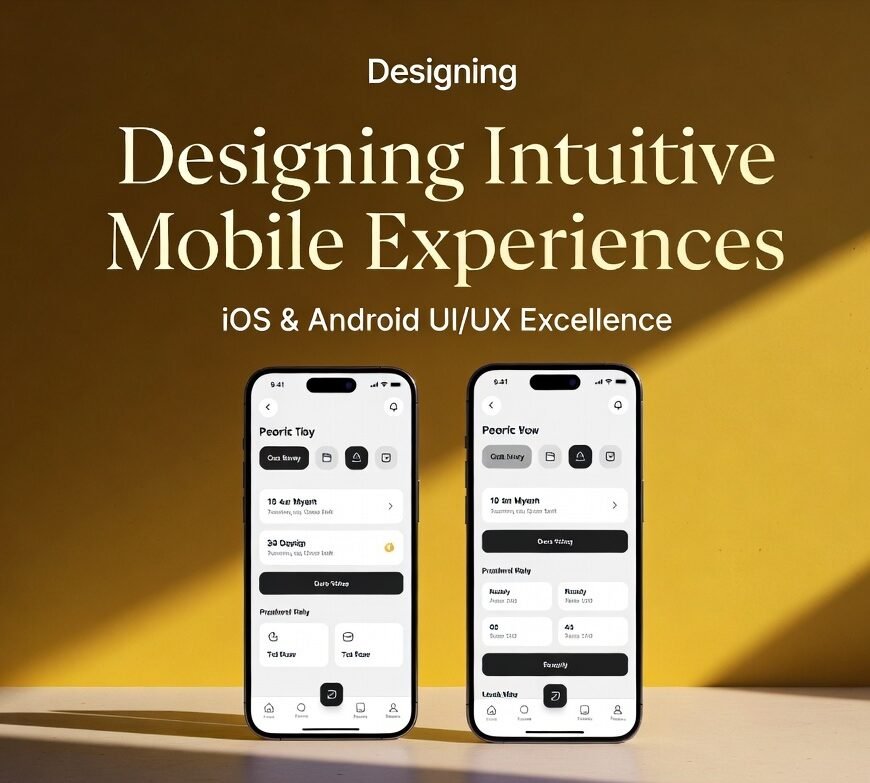
Perspective: From Design to Experience
Mobile applications today are no longer just functional tools—they are experiences. A well-designed app does more than look good; it guides users, builds trust, and drives engagement. Poor design, on the other hand, leads to confusion, drop-offs, and lost opportunities.
This case study explores how CnEl India approached the design of a mobile application for both iOS and Android platforms, transforming a basic idea into a refined, user-centric digital experience.
Understanding the Real Objective
At first glance, the requirement seemed straightforward:
design a mobile application interface that is visually appealing and user-friendly.
However, the deeper objective was far more strategic:
- Create an intuitive user journey
- Ensure consistency across iOS and Android platforms
- Align the design with brand identity
- Maximize usability while maintaining aesthetic quality
- Build a scalable design system for future growth
The project required more than design—it required experience engineering.
Initial Situation: The Gap Between Idea and Execution
The client had a clear vision of their product but lacked structured design direction.
Key issues included:
- No defined user flow or navigation structure
- Inconsistent design ideas across screens
- Lack of clarity in user interactions
- No established design system
- Difficulty translating business goals into UI elements
The product existed as an idea—but not yet as a cohesive user experience.
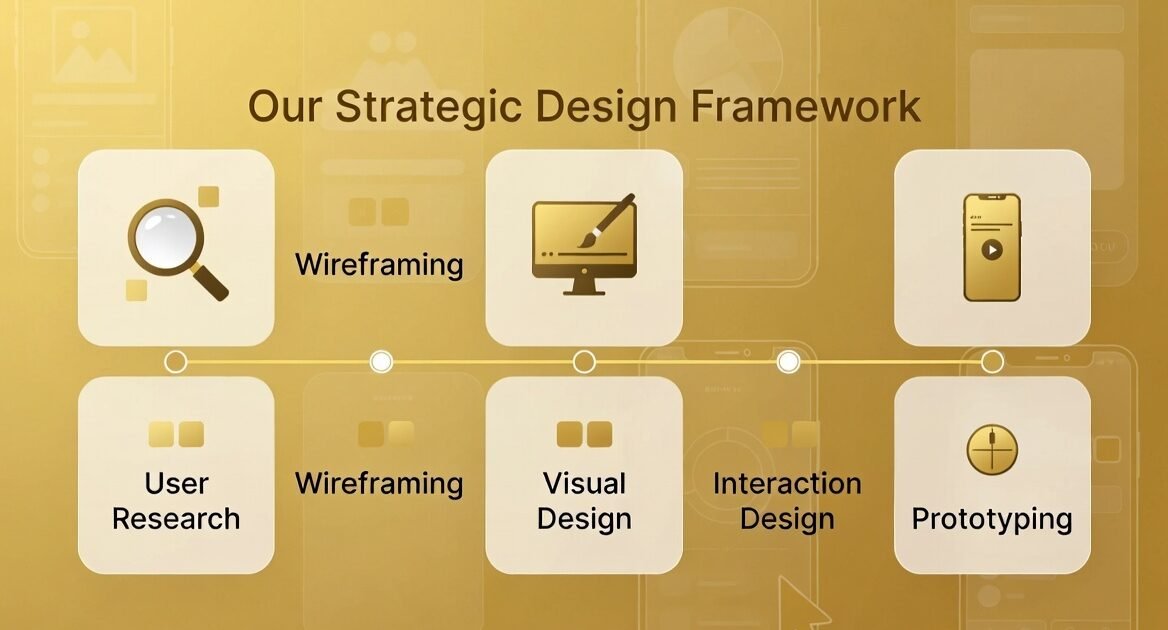
CnEl India’s Design Framework
To address these challenges, CnEl India followed a structured, insight-driven approach that focused on both usability and visual storytelling.
Our framework included:
- User Understanding
- Experience Mapping
- Visual Structuring
- Interaction Design
- Prototype Validation
This ensured that every design decision had a purpose.
Phase 1: Understanding Users, Not Just Requirements
Instead of starting with visuals, we began with user thinking.
We identified:
- Who the users are
- What they want to achieve
- Where they may face confusion
- What motivates them to continue using the app
This helped us shift the focus from “what to design” to “why to design.”
Phase 2: Structuring the User Journey
A good app is like a guided path—not a maze.
We created a clear user journey map, ensuring:
- Smooth navigation between screens
- Logical grouping of features
- Minimal cognitive load for users
- Clear entry and exit points
Every action in the app was mapped to a user intention.
Phase 3: Wireframing – Building the Foundation
Before adding visual elements, we developed wireframes to define structure.
This stage focused on:
- Layout positioning
- Content hierarchy
- Navigation flow
- Functional clarity
Wireframes allowed us to validate ideas quickly without being distracted by design details.
Phase 4: Designing Visual Identity
Once the structure was finalized, we moved to high-fidelity design.
Key design principles applied:
- Clean and modern interface
- Consistent color palette aligned with brand
- Readable and scalable typography
- Balanced use of whitespace
- Visual hierarchy for easy scanning
The goal was to create a design that feels both professional and approachable.
Phase 5: Cross-Platform Consistency
Designing for both iOS and Android requires careful balance.
We ensured:
- Consistent user experience across platforms
- Platform-specific design guidelines where necessary
- Uniform branding and visual identity
- Adaptation to different screen sizes and resolutions
This created a seamless experience regardless of the device.
Phase 6: Interaction & Micro-Experience Design
User experience is defined by interactions—not just visuals.
We designed:
- Smooth transitions between screens
- Clear feedback for user actions
- Intuitive gestures and navigation
- Responsive touch elements
These small details significantly improved usability and engagement.
Phase 7: High-Fidelity Prototyping
To bring the design to life, we created interactive prototypes.
This allowed:
- Realistic simulation of user interactions
- Early detection of usability issues
- Better communication with stakeholders
- Faster iteration and improvement
The prototype acted as a bridge between design and development.
Transformation Achieved
The project resulted in a complete transformation of the product experience.
1. Clarity in Navigation
Users could easily understand how to move through the app without confusion.
2. Improved User Engagement
A clean and intuitive interface encouraged users to spend more time within the app.
3. Strong Visual Identity
The design aligned perfectly with the brand, creating a professional impression.
4. Reduced User Friction
Simplified interactions minimized errors and improved usability.
5. Scalable Design System
The app design could now easily support future features and updates.
What Made This Approach Unique
Unlike traditional design methods, this project focused on strategic simplicity.
What set CnEl India Private Limited apart:
- Designing with purpose, not decoration
- Prioritizing user behavior over visual trends
- Building scalable design systems
- Maintaining balance between iOS and Android standards
- Focusing on long-term usability
Business Impact
The improved design directly contributed to:
- Better user retention
- Higher interaction rates
- Improved user satisfaction
- Stronger brand perception
The app evolved from a concept into a market-ready product experience.
Key Design Principles Applied
This project reinforced several important principles:
- Simplicity enhances usability
- Consistency builds trust
- Visual hierarchy improves comprehension
- User-centric design drives engagement
- Good design reduces the need for explanation
Long-Term Value Delivered
The client now benefits from:
- A complete design system
- Ready-to-develop UI assets
- Clear user journey structure
- Scalable and adaptable interface
- Strong foundation for future enhancements
Final Reflection
Design is not just about how something looks—it’s about how it works, feels, and guides the user.
Through a structured and thoughtful approach, CnEl India successfully transformed an abstract idea into a refined mobile experience that balances usability, aesthetics, and performance.
This case study highlights that great mobile design is not created by adding more elements—but by removing friction and enhancing clarity.