
A Strategic Case Study on Building Seamless Global User Experiences
The Bigger Picture
A website is no longer just a digital presence—it is the first point of trust, communication, and conversion for most businesses. When users visit a website, they expect clarity, speed, and a smooth experience regardless of their language or location.
For businesses serving diverse audiences, language barriers and complicated booking processes can significantly reduce engagement and conversions. This was exactly the challenge faced by our client.
This case study explores how CnEl India successfully enhanced a business website by introducing multilingual capabilities and optimizing the booking page to create a more intuitive, interactive, and conversion-focused user journey.
The project was not simply about adding translations or redesigning a page—it was about creating a better digital experience for every visitor.
Understanding the Client’s Situation
The client operated a service-based business with customers from multiple regions and language backgrounds. Their existing website was functional but had two major limitations:
1. Language Accessibility Issues
The website was primarily available in one language, creating friction for international visitors and reducing user trust among non-native speakers.
2. Inefficient Booking Experience
The booking page lacked clarity, structure, and responsiveness. Users often abandoned the process due to confusion, too many steps, or lack of trust signals.
The business was receiving traffic, but the conversion rate was lower than expected.
The real problem was not traffic—it was user experience.
The Hidden Challenge
At first glance, the requirement seemed simple:
- Add multilingual functionality
- Improve the booking page
But the actual challenge was far deeper.
The goal was to:
- Maintain design consistency across languages
- Ensure content remained dynamic and manageable
- Improve booking flow without increasing complexity
- Preserve mobile responsiveness across all pages
- Improve user trust and reduce drop-offs
- Build a scalable structure for future updates
This required both technical precision and strong UX strategy.
CnEl India’s Experience-First Approach
At CnEl India Private Limited, we believe that successful websites are built around user behavior—not just features.
For this project, we followed an Experience-First Development Framework, focusing on:
Discover → Structure → Simplify → Optimize → Scale
This ensured that every improvement directly supported user satisfaction and business growth.
Phase 1: User Journey Discovery
Before making changes, we studied how users interacted with the website.
We analyzed:
- Where users dropped off
- Which booking steps created friction
- How users navigated service pages
- Language-based behavior differences
- Mobile vs desktop engagement patterns
This helped us identify not just technical issues, but emotional friction points where users lost confidence.
Understanding behavior was more important than redesigning visuals.
Phase 2: Multilingual Experience Design
Adding multiple languages is not simply translating text.
It requires preserving usability across different content lengths, layouts, and reading behaviors.
Our focus included:
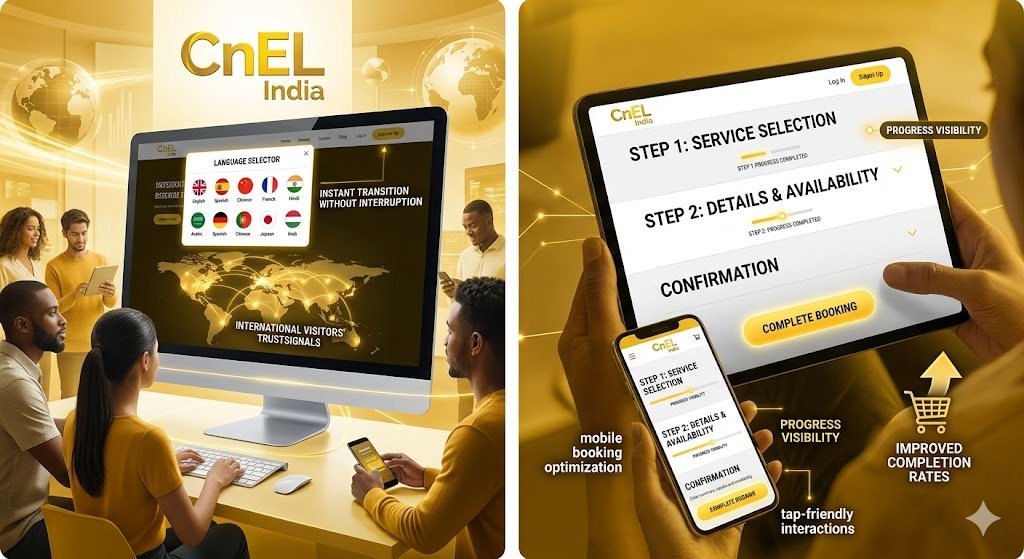
Language Switching Without Friction
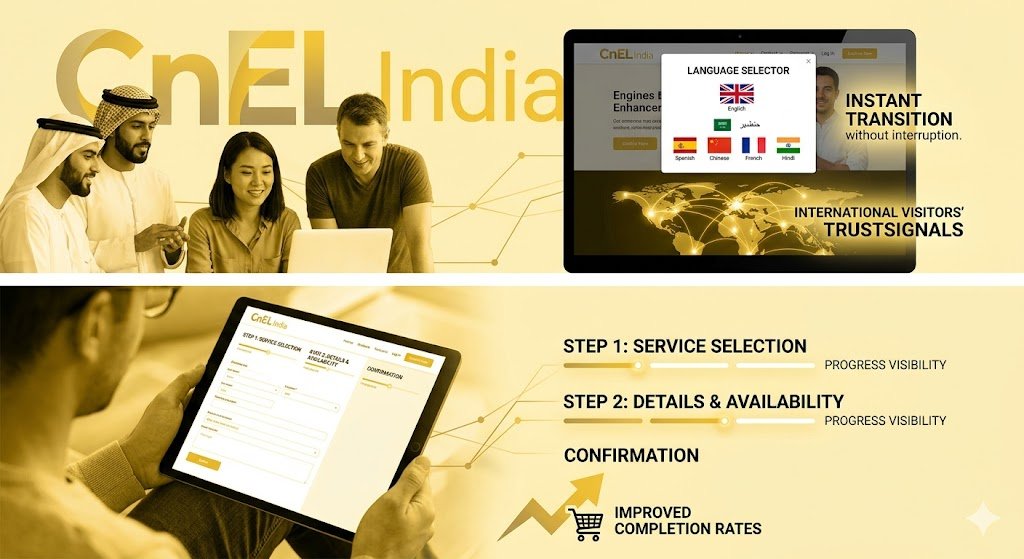
Users needed to change languages instantly without losing their current page context.
We created a smooth experience where users could switch languages naturally without interruption.
Consistent Design Across Languages
Different languages create different spacing and layout challenges.
We ensured:
- Proper text alignment
- Visual consistency across all versions
- No broken layouts due to translation length
- Equal professionalism in every language version
Every language needed to feel native—not secondary.
Dynamic Content Management
The client needed the ability to update content easily without creating operational complexity.
We structured the system to ensure future updates remained simple and scalable.
This prevented long-term maintenance issues.
Phase 3: Booking Page Re-Engineering
The booking page was the most critical conversion point—and also the weakest part of the website.
Instead of redesigning visually first, we redesigned the decision-making flow.
Step 1: Reducing Cognitive Load
Users should never feel overwhelmed while booking.
We simplified:
- Form structure
- Number of visible steps
- Required fields
- User instructions
The goal was to create momentum, not hesitation.
Step 2: Improving Visual Trust
Users make booking decisions based on trust.
We enhanced:
- Clear service summaries
- Professional confirmation messaging
- Cleaner call-to-action placement
- Better visual hierarchy
- Stronger credibility indicators
Trust improves conversions more than design alone.
Step 3: Mobile Booking Optimization
A large percentage of users were booking through mobile devices.
We optimized:
- Tap-friendly interactions
- Faster page loading
- Smooth form completion
- Reduced scrolling friction
- Better responsiveness across devices
Booking needed to feel effortless on mobile.
Phase 4: Interactive User Experience Improvements
Modern users expect websites to feel responsive and intelligent.
We introduced dynamic behaviors that improved usability:
- Instant form feedback
- Clear progress indicators
- Smooth transitions between actions
- Faster loading interactions
- Improved confirmation flows
These small details created major improvements in perceived quality.
Phase 5: Performance & Stability Optimization
User experience fails if performance suffers.
We ensured:
- Faster page speed
- Optimized content loading
- Lightweight structure
- Stable performance across browsers
- Consistent functionality across devices
A good experience must also be reliable.
The Transformation
The final result was not just an upgraded website—it was a stronger business platform.
What Changed
1. Higher User Confidence
Visitors could now browse and book in their preferred language, increasing trust immediately.
2. Improved Booking Completion Rates
Simplified flows reduced abandonment and increased successful bookings.
3. Better Mobile Engagement
Mobile users experienced smoother interactions, leading to stronger conversions.
4. Stronger International Reach
The multilingual structure expanded accessibility to a wider audience.
5. Easier Future Scalability
The client now had a flexible foundation for future languages, services, and booking enhancements.
What Made This Project Different
Many website projects focus only on appearance.
This project focused on behavior-driven optimization.
What made CnEl India Private Limited different:
- UX strategy before design execution
- Conversion thinking before visual design
- Long-term scalability planning
- User trust as a design priority
- Simplicity over unnecessary complexity
The project succeeded because we solved the right problem.
Key Strategic Lessons
This project reinforced several critical principles:
Language is a Trust Factor
Users engage more when they feel understood.
Booking Simplicity Drives Revenue
Reducing friction directly improves conversions.
Small UX Improvements Create Big Results
Minor interaction changes often produce major business impact.
Scalable Systems Save Future Costs
Building correctly once is better than rebuilding repeatedly.
Long-Term Business Value
The client now benefits from:
- Better customer engagement
- Higher booking efficiency
- Improved global accessibility
- Stronger brand trust
- Reduced operational friction
- Future-ready digital infrastructure
The website evolved from a basic platform into a strategic growth asset.
Final Reflection
A website should not only look professional—it should work intelligently.
Through thoughtful planning and experience-focused execution, CnEl India Private Limited successfully transformed a standard website into a multilingual, high-converting business platform.
This project demonstrates that the true value of digital enhancement lies not in adding more features, but in removing barriers between the user and action.
Because in digital business, the best experience always wins.