
Introduction
The food service industry has rapidly evolved through digital transformation, especially in restaurant operations and kitchen workflow management. Modern restaurants, cloud kitchens, and food chains require fast, organized, and highly responsive systems that help kitchen teams manage incoming orders efficiently in real time.
Traditional paper-based kitchen operations often create several operational issues such as:
- Delayed order handling
- Miscommunication between staff
- Human errors
- Slow preparation workflows
- Order confusion during peak hours
- Inefficient kitchen coordination
To solve these challenges, businesses increasingly rely on Kitchen Display Systems (KDS), which replace printed tickets and manual communication with real-time digital order management interfaces.
This case study explains how CnEL India can successfully design and develop a tablet-first real-time Kitchen Display System frontend for a modern food operations platform called “Gravy.”
The project focuses on creating a highly responsive and intuitive web application optimized specifically for tablet usage inside fast-paced kitchen environments.
CnEL India specializes in:
- Real-time frontend application development
- Responsive web interfaces
- High-performance dashboard systems
- Operational workflow applications
- Tablet-first UI/UX engineering
- Real-time data visualization
- Scalable restaurant technology solutions
The objective of this project is to create a fast, stable, and highly usable kitchen management interface that improves operational efficiency, reduces kitchen errors, and supports smooth restaurant workflows in real time.
Understanding the Kitchen Display System Requirement
A Kitchen Display System is a real-time operational interface used by kitchen staff to monitor, organize, and process incoming food orders digitally.
Unlike traditional restaurant applications, KDS systems must function in:
- High-pressure environments
- Fast-paced operational workflows
- Multi-order processing situations
- Continuous real-time updates
The frontend system must prioritize:
- Speed
- Clarity
- Stability
- Responsiveness
- Touch-friendly interaction
- Real-time synchronization
The application is intended primarily for tablet devices used inside kitchens, meaning the user experience must be optimized specifically for touch-based operational environments.
CnEL India’s Approach to KDS Frontend Development
CnEL India approaches Kitchen Display System development through a combination of:
- Operational workflow analysis
- Real-time interface engineering
- Tablet-first UX design
- Performance optimization
- Responsive frontend architecture
- Kitchen usability strategy
Kitchen staff require interfaces that are:
- Extremely fast
- Easy to understand
- Visually organized
- Error-resistant
- Reliable under pressure
The company focuses on designing interfaces that improve workflow speed while minimizing cognitive overload for kitchen teams.
Tablet-First User Experience Strategy
The client specifically requires a tablet-first application.
CnEL India develops interfaces optimized for:
- Touch interaction
- Landscape orientation
- Fast tapping workflows
- Large visual elements
- Readable typography
- Clear order prioritization
Kitchen staff often interact with the system while multitasking, moving quickly, or wearing gloves.
This means the interface must prioritize usability over unnecessary visual complexity.
Real-Time Order Management System
The core functionality of the KDS frontend is real-time order synchronization.
CnEL India develops interfaces capable of displaying:
- Incoming orders instantly
- Order preparation status
- Completion workflows
- Priority indicators
- Time-sensitive alerts
- Multi-order queue management
The frontend communicates continuously with backend systems to ensure all kitchen displays remain synchronized in real time.
Order Workflow Visualization
Kitchen operations depend heavily on visual clarity.
CnEL India designs structured order displays that help kitchen staff quickly identify:
- New orders
- Active preparation tasks
- Delayed items
- Completed orders
- Special instructions
- Preparation timing
The system reduces operational confusion and improves coordination between kitchen stations.
Responsive Frontend Architecture
The KDS system must perform smoothly across different screen sizes and kitchen hardware.
CnEL India develops responsive frontend systems that adapt efficiently to:
- Tablets
- Larger kitchen displays
- Touchscreen systems
- Browser-based deployment environments
Responsive architecture ensures operational consistency across devices.
High-Performance Frontend Engineering
Kitchen environments demand extremely responsive interfaces.
CnEL India focuses heavily on frontend performance optimization through:
- Fast rendering systems
- Lightweight UI structures
- Efficient state management
- Smooth real-time updates
- Optimized component architecture
Performance delays in kitchen systems can negatively impact restaurant operations, so frontend efficiency becomes critical.
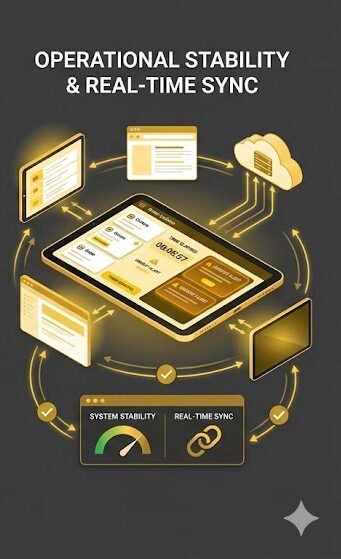
Real-Time Synchronization and Operational Stability
Real-time systems require reliable synchronization between frontend displays and backend infrastructure.
CnEL India ensures:
- Instant order updates
- Stable data refresh systems
- Reliable connection handling
- Efficient event synchronization
- Operational continuity during high traffic periods
The system is designed to remain stable even during busy restaurant hours.
Kitchen-Focused UI/UX Design Principles
Kitchen environments differ significantly from traditional office or consumer applications.
CnEL India designs KDS interfaces based on:
- Minimal distractions
- Fast readability
- Color-coded status indicators
- Large touch targets
- Simplified interaction flows
The interface must help staff make quick decisions under pressure.
Clear Information Hierarchy
Kitchen staff need instant visibility into important information.
CnEL India structures the interface to prioritize:
- Order timing
- Item status
- Preparation priority
- Special requests
- Queue organization
Visual hierarchy improves operational efficiency and reduces preparation mistakes.
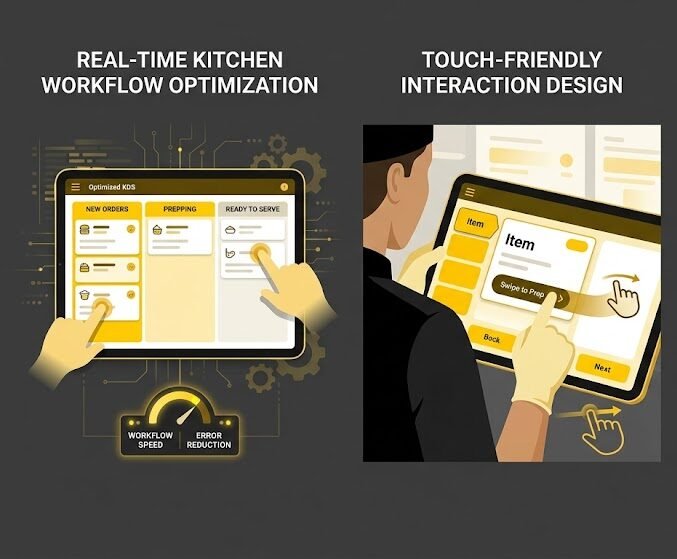
Touch-Friendly Interaction Design
Because the application is tablet-first, touch usability becomes extremely important.
CnEL India develops:
- Large action buttons
- Swipe-friendly interactions
- Gesture-based workflows
- Quick-tap functionality
- Simplified operational controls
The goal is to reduce interaction friction during fast kitchen operations.
Order Status Management
The KDS frontend supports multiple order states such as:
- New
- In progress
- Ready
- Completed
- Delayed
CnEL India designs intuitive status workflows that allow staff to update order states quickly and efficiently.
This improves communication between:
- Kitchen staff
- Front-of-house teams
- Delivery management systems
- Restaurant operations teams
Integration with Existing Backend Systems
The project requires frontend integration with pre-existing backend infrastructure.
CnEL India collaborates closely with backend systems to ensure:
- Real-time communication
- Stable API integration
- Accurate order synchronization
- Efficient data handling
Frontend architecture is designed to work seamlessly with operational restaurant systems.
Scalability for Restaurant Operations
The KDS system must support future operational scaling.
CnEL India develops frontend systems prepared for:
- Multiple kitchen stations
- Multi-location restaurants
- Expanded order categories
- Increased traffic volumes
- Advanced operational analytics
The architecture is designed to support business growth without requiring major redevelopment.
Operational Workflow Optimization
Restaurant operations rely heavily on speed and coordination.
CnEL India focuses on reducing:
- Order processing delays
- Human confusion
- Workflow interruptions
- Communication gaps
The KDS frontend becomes an operational efficiency tool rather than just a display interface.
Visual Status Indicators and Alerts
Kitchen staff need immediate awareness of operational priorities.
CnEL India incorporates:
- Color-coded order states
- Preparation timers
- Delay indicators
- Urgent order alerts
- Status notifications
These visual systems improve response speed and reduce operational errors.
Error Reduction Through Digital Workflows
Manual kitchen operations often result in:
- Lost tickets
- Missed modifications
- Delayed preparation
- Miscommunication
CnEL India’s digital KDS workflows help minimize these problems through structured real-time interfaces.
This improves order accuracy and overall customer satisfaction.
Mobile and Browser Accessibility
The frontend application is browser-based, allowing flexible deployment across devices.
CnEL India ensures compatibility with:
- Tablet browsers
- Touchscreen systems
- Restaurant management environments
- Cloud-based infrastructure
This improves deployment flexibility and operational convenience.
Future Enhancement Possibilities
The KDS frontend architecture supports future operational upgrades such as:
- Kitchen analytics dashboards
- AI-powered preparation optimization
- Delivery tracking integration
- Voice notification systems
- Inventory synchronization
- Multi-location operational monitoring
CnEL India builds scalable foundations prepared for long-term product evolution.
Reliability in High-Pressure Environments
Kitchen systems operate continuously during peak operational hours.
CnEL India prioritizes:
- Frontend stability
- Real-time reliability
- Performance consistency
- Error handling systems
- Smooth recovery workflows
Operational reliability is critical for restaurant success.
Business Value Delivered by CnEL India
Through this project, CnEL India helps restaurant businesses achieve:
- Faster kitchen workflows
- Improved order organization
- Reduced operational errors
- Better staff coordination
- Faster preparation times
- Higher operational efficiency
- Improved customer experience
The KDS system becomes a core operational asset for the restaurant ecosystem.
Challenges Solved by CnEL India
Kitchen operations often struggle with:
- Manual ticket confusion
- Slow order communication
- Workflow inefficiencies
- Real-time coordination problems
- Poor kitchen visibility
CnEL India solves these challenges through real-time digital workflow systems optimized for restaurant operations.
Why CnEL India for Real-Time Frontend Systems
CnEL India combines:
- Frontend engineering expertise
- Responsive application development
- Real-time operational system design
- Tablet-first UX strategy
- Restaurant workflow understanding
- Scalable architecture planning
The company focuses on building high-performance interfaces designed for real-world operational environments.
Conclusion
This case study demonstrates how CnEL India can successfully design and develop a tablet-first real-time Kitchen Display System frontend that improves restaurant workflow efficiency, enhances kitchen coordination, and supports fast-paced operational environments.
The project is not simply about building a frontend interface — it is about creating a highly responsive operational ecosystem that helps restaurants manage orders more efficiently and improve overall service quality.
By combining responsive frontend engineering, tablet-optimized user experience design, real-time synchronization systems, scalable architecture planning, and kitchen-focused operational workflows, CnEL India helps modern restaurant businesses build smarter and more efficient digital kitchen management systems.