1. Introduction
In an increasingly competitive and fast-paced business environment, organizations must continuously evolve to remain efficient and profitable. Many companies struggle with operational inefficiencies caused by manual processes, disconnected systems, and limited data visibility. These challenges not only slow down productivity but also reduce the ability to respond quickly to new opportunities.
This case study highlights how CnEl India successfully developed and implemented an AI-powered operations software solution designed to streamline business processes, reduce administrative workload, and improve contract acquisition rates. By leveraging artificial intelligence and intelligent automation, we enabled our client to transform their operations and achieve measurable growth.
2. Client Background
The client is a mid-sized service-oriented organization managing multiple ongoing projects and client contracts. Despite having a strong customer base and steady demand, their internal operations were not optimized for scale.
As the company expanded, the complexity of managing tasks, tracking progress, and maintaining communication increased significantly. This resulted in inefficiencies that directly impacted productivity and revenue growth.
3. Challenges Faced
3.1 Manual and Time-Consuming Processes
A large portion of the company’s daily operations relied on manual input, including data entry, reporting, and document management. These repetitive tasks consumed valuable time and resources.
3.2 High Administrative Overhead
Employees were spending excessive time on administrative activities rather than focusing on strategic and revenue-generating tasks.
3.3 Fragmented Data Systems
Business data was stored across multiple platforms and formats, making it difficult to access, analyze, and utilize effectively.
3.4 Limited Visibility and Insights
The absence of a centralized system made it challenging for leadership to gain real-time insights into performance, project status, and financial outcomes.
3.5 Missed Business Opportunities
Due to delayed responses and lack of predictive insights, the company often missed out on potential contracts and growth opportunities.
4. Project Objectives
The primary goal of the project was to design and develop a comprehensive AI-powered operations platform that could:
- Automate repetitive administrative tasks
- Centralize and organize operational data
- Provide real-time analytics and insights
- Enhance decision-making through predictive intelligence
- Improve efficiency and scalability of business processes
- Increase the company’s success rate in securing contracts
5. Our Approach
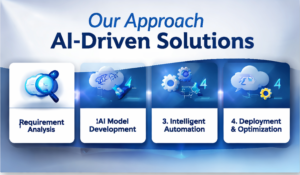
5.1 In-Depth Requirement Analysis
CnEl India began by conducting detailed discussions with key stakeholders to understand existing workflows, operational bottlenecks, and long-term business goals. This allowed us to identify critical areas where automation and AI could deliver the most value.
5.2 System Architecture Design
A scalable and flexible system architecture was designed to ensure seamless integration with existing workflows while allowing future expansion. The focus was on creating a user-friendly and efficient platform.
5.3 AI Strategy Implementation
We incorporated advanced AI capabilities into the system, including:
- Intelligent data processing for document handling
- Predictive modeling for business insights
- Automation logic for workflow optimization
5.4 Agile Development Methodology
The development process followed an iterative approach, allowing continuous improvements based on user feedback and evolving requirements.
6. Solution Overview
The final solution was an integrated AI operations platform with several powerful features:
6.1 Intelligent Workflow Automation
The system automated routine tasks such as:
- Data entry and updates
- Task assignment and tracking
- Process approvals and notifications
This significantly reduced manual effort and improved consistency across operations.
6.2 Advanced Document Processing
The platform could automatically:
- Extract key information from business documents
- Organize and categorize files efficiently
- Generate concise summaries for quick review
This reduced the time spent on document management and minimized errors.
6.3 Predictive Insights for Business Growth
Using historical data, the system provided:
- Identification of high-potential opportunities
- Forecasting of project outcomes
- Recommendations for improving success rates
This empowered the company to make proactive decisions.
6.4 Centralized Data Dashboard
A real-time dashboard was developed to provide:
- Performance tracking
- Project status updates
- Financial and operational insights
- Task progress monitoring
This improved transparency and enabled faster decision-making.
6.5 Smart Alerts and Notifications
The system delivered timely notifications regarding:
- Upcoming deadlines
- Pending approvals
- High-priority tasks
- Potential risks and opportunities
This ensured that no critical activity was overlooked.
7. Implementation Process
7.1 Data Consolidation
All relevant data sources were unified into a centralized system, ensuring consistency and accessibility.
7.2 Model Development and Optimization
AI models were trained using existing data and continuously refined to improve accuracy and performance.
7.3 User Training and Adoption
Comprehensive training sessions were conducted to ensure employees could effectively use the new system. The interface was designed to be intuitive, minimizing the learning curve.
7.4 Phased Deployment
The system was deployed in stages to ensure smooth integration and minimal disruption to ongoing operations.
8. Results and Impact
The implementation of the AI-powered operations platform delivered substantial benefits:
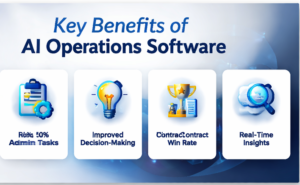
8.1 Significant Time Savings
Automation reduced manual workload by more than 50%, freeing up employees to focus on strategic tasks.
8.2 Improved Decision-Making
Access to real-time data and predictive insights enabled faster and more informed decisions.
8.3 Increased Contract Success Rate
The ability to identify and prioritize high-value opportunities led to a noticeable increase in contract wins.
8.4 Reduction in Errors
Automated processes minimized human errors, improving overall data accuracy and reliability.
8.5 Enhanced Productivity
Employees experienced improved efficiency and reduced stress, leading to higher overall productivity.
9. Key Learnings
9.1 Data Quality is Crucial
Accurate and well-structured data is essential for effective AI performance.
9.2 User Experience Drives Adoption
A simple and intuitive interface ensures better acceptance and usage of the system.
9.3 Continuous Improvement is Necessary
Regular updates and optimization are required to maintain system effectiveness and adapt to changing business needs.
10. Future Scope
Building on the success of this project, several future enhancements were identified:
- Expansion of AI capabilities for deeper insights
- Integration with additional internal systems
- Advanced customization options for different business needs
- Development of conversational AI interfaces for easier interaction
11. Conclusion
This case study demonstrates the transformative impact of AI-driven operations software on modern businesses. By automating repetitive tasks, centralizing data, and providing intelligent insights, organizations can significantly improve efficiency, reduce costs, and enhance their ability to compete in the market.
Our solution not only addressed the client’s immediate operational challenges but also laid a strong foundation for long-term growth and scalability. As businesses continue to adopt AI technologies, such solutions will become essential for achieving sustainable success.