
Introduction
Video has become one of the most important formats for modern e-commerce brands. However, creating a visually attractive video is not enough when the primary objective is to generate sales.
Performance-focused video advertising requires a different approach. The first few seconds need to capture attention, the message must communicate the product clearly, the editing needs to maintain interest, and the final call to action should encourage viewers to take the desired next step.
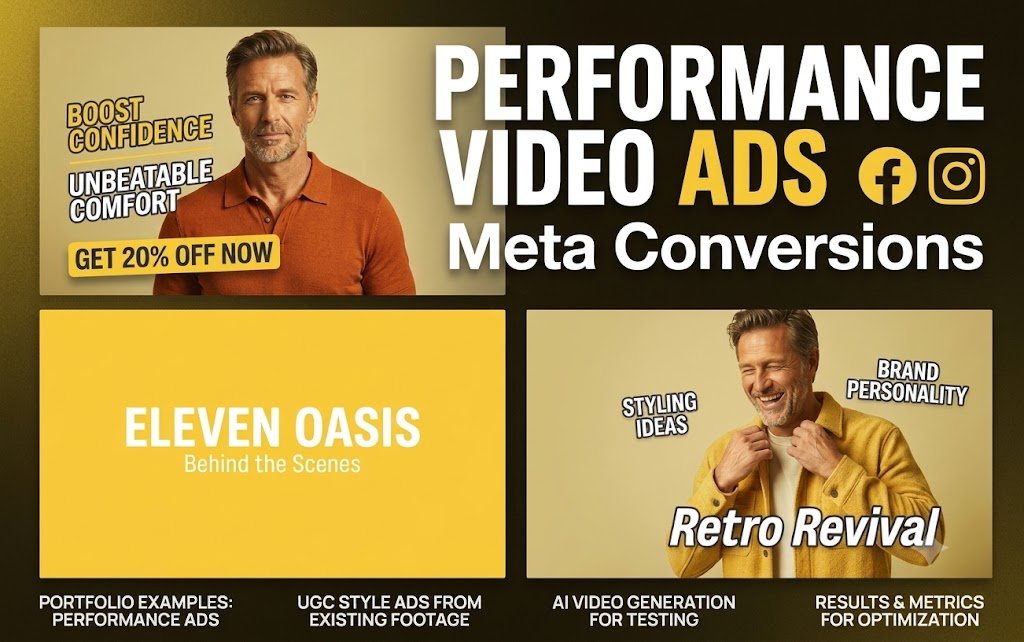
This case study focuses on a video content and performance advertising project for a direct-to-consumer men’s apparel brand specializing in distinctive, retro-inspired clothing for men aged 45 and above.
The project involved creating short-form advertising videos for social media platforms while also producing organic content designed for entertainment, engagement, and brand personality.
The key challenge was to transform existing user-generated footage, product images, lifestyle material, and other brand assets into compelling video content that could perform effectively in paid advertising campaigns.
CnEL India’s approach to this type of project combines creative storytelling, audience understanding, performance-focused editing, content variation, and continuous learning from campaign results.
Understanding the Brand and Audience
The brand had a clearly defined target audience: men aged 45 and above who appreciate distinctive, retro-inspired apparel.
This audience definition was important because effective advertising begins with understanding who is watching.
A video designed for a younger audience may rely heavily on fast transitions, highly aggressive editing, or current internet trends. Those techniques may not necessarily be appropriate for an older audience.
The creative direction therefore needed to balance modern social media behavior with the personality of the target customer.
The content needed to communicate:
- Style.
- Confidence.
- Individuality.
- Quality.
- Personality.
- Comfort.
- Nostalgic appeal.
The objective was to make the products feel relevant and desirable without making the advertising feel forced or overly promotional.
The Difference Between Paid and Organic Content
One of the most important requirements was understanding the difference between paid advertising and organic social content.
Although both formats may use the same product footage, they have different objectives.
Paid Advertising
Performance advertising is designed to drive measurable action.
The video may need to:
- Capture attention quickly.
- Communicate the product benefit.
- Create interest.
- Address a customer need.
- Build trust.
- Create urgency or desire.
- Encourage a purchase or other conversion.
Every part of the video should contribute to the campaign objective.
Organic Social Content
Organic content can focus more heavily on:
- Entertainment.
- Community.
- Brand personality.
- Storytelling.
- Conversation.
- Engagement.
- Shareability.
The objective may not always be immediate sales.
Therefore, the same footage may require two different editing approaches depending on where and why it is being published.
Turning Existing Assets Into New Content
A major part of the project involved working with existing material.
The available assets could include:
- User-generated content.
- Product footage.
- Lifestyle videos.
- Product photography.
- Creator recordings.
- Brand messaging.
- Existing promotional material.
Instead of requiring new production for every video, the editing process focused on maximizing the value of existing assets.
This can significantly reduce content production costs while allowing brands to create many different creative variations.
A single piece of footage can potentially become several advertisements by changing:
- Opening hook.
- Video order.
- Message.
- Captions.
- Voiceover.
- Music.
- Pacing.
- Product emphasis.
- Call to action.
This makes content production more scalable.
Building Strong Hooks
The first few seconds of a short-form advertisement are critical.
A viewer can quickly scroll away if the opening does not create interest.
For this reason, the editing process focused heavily on developing different opening approaches.
Possible hook directions could include:
- A surprising statement.
- A product-focused visual.
- A relatable problem.
- A style transformation.
- A question.
- A strong customer benefit.
- A direct statement about the audience.
- A curiosity-driven opening.
The goal was not simply to make the beginning visually exciting.
The hook needed to attract the right audience and create enough curiosity to encourage continued viewing.
Storytelling for Conversion
Once attention has been captured, the video needs to maintain interest.
A strong performance advertisement can follow a simple storytelling structure:
Hook → Problem or Desire → Product Introduction → Benefits → Proof or Context → Call to Action
This structure helps the viewer understand why the product matters.
For an apparel brand, the story could move from a common style challenge to showing how a particular piece of clothing provides a distinctive solution.
The product should not simply appear on screen.
The viewer should understand why they should care about it.
UGC-Style Advertising
User-generated content can be particularly effective because it often feels more authentic than traditional advertising.
Instead of presenting a highly polished commercial, UGC-style content can feel like a real person sharing a product experience.
The editing approach needs to preserve that authenticity.
Over-editing can make UGC content feel artificial.
The objective is to maintain a natural tone while improving the structure and clarity of the content.
This can involve:
- Removing unnecessary pauses.
- Improving pacing.
- Highlighting important statements.
- Adding readable captions.
- Using supporting product visuals.
- Emphasizing key benefits.
- Creating a strong opening.
The result should feel natural while still being strategically designed for performance.
Product-Focused Video Content
Not every advertisement needs to rely on a creator speaking directly to the audience.
Product-focused videos can use clothing footage, lifestyle scenes, close-up details, and photographs to communicate the product visually.
This approach can highlight:
- Fabric.
- Patterns.
- Colors.
- Fit.
- Styling.
- Product details.
- Different outfit combinations.
The editing needs to make these details easy to notice without overwhelming the viewer.
For an apparel brand, visual storytelling is particularly important because customers want to understand how the clothing looks and feels before making a purchase.
Creating Multiple Creative Variations
Performance advertising requires testing.
There is rarely one universally successful version of a video.
Two videos can use the same product but produce very different results because of differences in the opening, pacing, message, or call to action.
The project therefore emphasized creating meaningful creative variations.
Variations could include:
- Different hooks.
- Different opening shots.
- Different product sequences.
- Different messaging.
- Different captions.
- Different voiceovers.
- Different calls to action.
- Different pacing.
The purpose of these variations was not to create random versions.
Each variation should test a specific creative hypothesis.
For example, one version may focus on the product’s distinctive design while another focuses on the lifestyle benefit.
Performance results can then provide insight into which message resonates more strongly with the target audience.
Using Captions and Text Overlays
Many social media users watch videos without sound.
Captions and text overlays therefore play an important role in communicating the message.
Text needs to be:
- Easy to read.
- Brief.
- Properly timed.
- Visually clear.
- Relevant to what is being shown.
Too much text can overwhelm the viewer.
The editing process should therefore prioritize the most important information and synchronize it with the visual content.
Captions can also reinforce important product benefits and make the video understandable even without audio.
Voiceovers, Music, and Sound Design
Audio can significantly influence the emotional experience of a video.
Voiceovers can explain product benefits, communicate stories, or create a more personal connection.
Music can establish mood and pacing.
Sound effects can emphasize important moments.
However, these elements should support the message rather than distract from it.
The appropriate combination depends on the creative objective.
A direct-response advertisement may benefit from a clear voiceover and concise messaging, while an organic social video may use more entertainment-oriented sound and pacing.
Adapting Content for the Target Audience
Because the brand targets men aged 45 and above, audience sensitivity was important.
The creative style should feel modern without becoming disconnected from the audience.
The messaging should respect the audience’s experience and preferences.
Rather than assuming that older audiences respond to outdated advertising styles, the content can present them as confident, active, stylish, and interested in expressing their individuality.
This helps position the brand around identity and lifestyle rather than simply age.
Creating AI-Generated Video Content
Another requirement was the ability to create realistic AI-generated video content when needed.
AI-generated visuals can help expand creative possibilities when existing footage is limited.
For example, generated scenes can potentially support:
- Concept testing.
- Creative variations.
- Visual storytelling.
- Background scenes.
- Promotional concepts.
- Experimental advertisements.
However, generated content should still match the brand’s visual identity and maintain credibility.
The objective is not to use AI simply because it is available.
It should be used when it provides a meaningful creative or production advantage.
Performance-Focused Editing
Performance editing requires constant attention to viewer behavior.
If a video loses viewers early, the opening may need improvement.
If viewers watch but do not take action, the message or call to action may need adjustment.
If one product presentation performs better than another, future videos can incorporate that learning.
This makes performance editing an ongoing process rather than a one-time production task.
The strongest creative workflow is therefore:
Create → Test → Measure → Learn → Improve → Create Again
Learning From Campaign Results
Performance data can provide valuable creative insights.
For example, campaign results may reveal that:
- One hook attracts more viewers.
- One product benefit generates more interest.
- Certain video lengths perform better.
- A specific storytelling approach creates stronger engagement.
- Certain calls to action encourage more conversions.
- Certain visual styles resonate better with the audience.
These learnings should be documented and used to influence future creative decisions.
This creates a feedback loop where the content becomes increasingly aligned with actual audience behavior.
Organic Social Media Strategy
Organic content has a different role in the overall strategy.
While paid advertising focuses strongly on measurable business outcomes, organic content can help build the personality of the brand.
Possible organic content can include:
- Styling ideas.
- Behind-the-scenes footage.
- Product stories.
- Customer-focused content.
- Entertaining clips.
- Fashion inspiration.
- Brand stories.
- Seasonal content.
The editing can be more relaxed and personality-driven.
This helps create a social presence that feels like a brand rather than a continuous stream of advertisements.
Dual-Purpose Content
A particularly valuable workflow is transforming one creative concept into both paid and organic versions.
The core footage can remain the same while the editing changes according to the objective.
For example, the organic version may have:
- More storytelling.
- More personality.
- A softer call to action.
- Greater entertainment value.
The paid version may have:
- A stronger opening.
- Faster pacing.
- More direct product benefits.
- Clearer conversion messaging.
- A stronger call to action.
This allows brands to get greater value from each piece of source material.
Quality Control and Revision Process
Consistency is essential for a long-term creative relationship.
Every video should be checked for:
- Correct product information.
- Clear messaging.
- Accurate captions.
- Appropriate pacing.
- Visual quality.
- Audio quality.
- Branding consistency.
- Proper call to action.
- Platform suitability.
Feedback should be incorporated systematically rather than treating every revision as an isolated request.
A clear revision process also helps maintain predictable delivery timelines.
CnEL India’s Approach
CnEL India approaches performance video projects by combining creative thinking with measurable objectives.
The process can begin with understanding the product, target customer, campaign objective, available assets, and desired outcome.
The next stage is creative planning.
Instead of creating one version and stopping, the team can identify multiple potential hooks and messaging directions.
The editing stage then transforms available footage into polished, audience-focused content.
After delivery, campaign performance can provide additional information about what works.
That information can then influence future creative decisions.
This creates a continuous improvement cycle rather than a one-time video production process.
Business Benefits
A structured performance video strategy can provide several business benefits.
Better Advertising Performance
Testing different creative approaches can help identify stronger-performing messages and formats.
Lower Content Production Costs
Existing footage can be transformed into multiple creative assets without requiring completely new production every time.
Faster Creative Testing
Multiple variations allow brands to test ideas more quickly.
Stronger Brand Identity
Consistent organic content can help establish a recognizable brand personality.
Better Audience Connection
Authentic UGC-style content can make advertising feel more relatable.
Improved Learning
Performance results can reveal what customers respond to, helping guide future campaigns.
Scalable Content Production
A repeatable editing and testing process allows brands to produce content consistently as advertising needs grow.
Conclusion
Performance video advertising requires much more than simply cutting footage together.
The most effective approach combines audience understanding, creative storytelling, strong hooks, product communication, authentic presentation, and continuous testing.
For a men’s apparel brand targeting an audience aged 45 and above, the creative strategy needs to communicate confidence, individuality, style, and relevance while maintaining an authentic connection with the audience.
The project demonstrates how existing UGC, product footage, lifestyle content, and photography can be transformed into multiple forms of content for both paid advertising and organic social media.
By creating different hooks, pacing styles, messages, calls to action, and creative variations, the brand can test different approaches and learn from actual audience behavior.
AI-generated content can further expand creative possibilities when used strategically, while performance data can help guide future decisions.
CnEL India’s approach focuses on building a repeatable creative process:
Understand the audience → Develop the concept → Edit for the objective → Create variations → Test performance → Learn → Improve.
The ultimate goal is not simply to produce more videos. It is to produce better-performing creative content that supports measurable business growth while strengthening the brand’s identity and relationship with its audience.