
Introduction
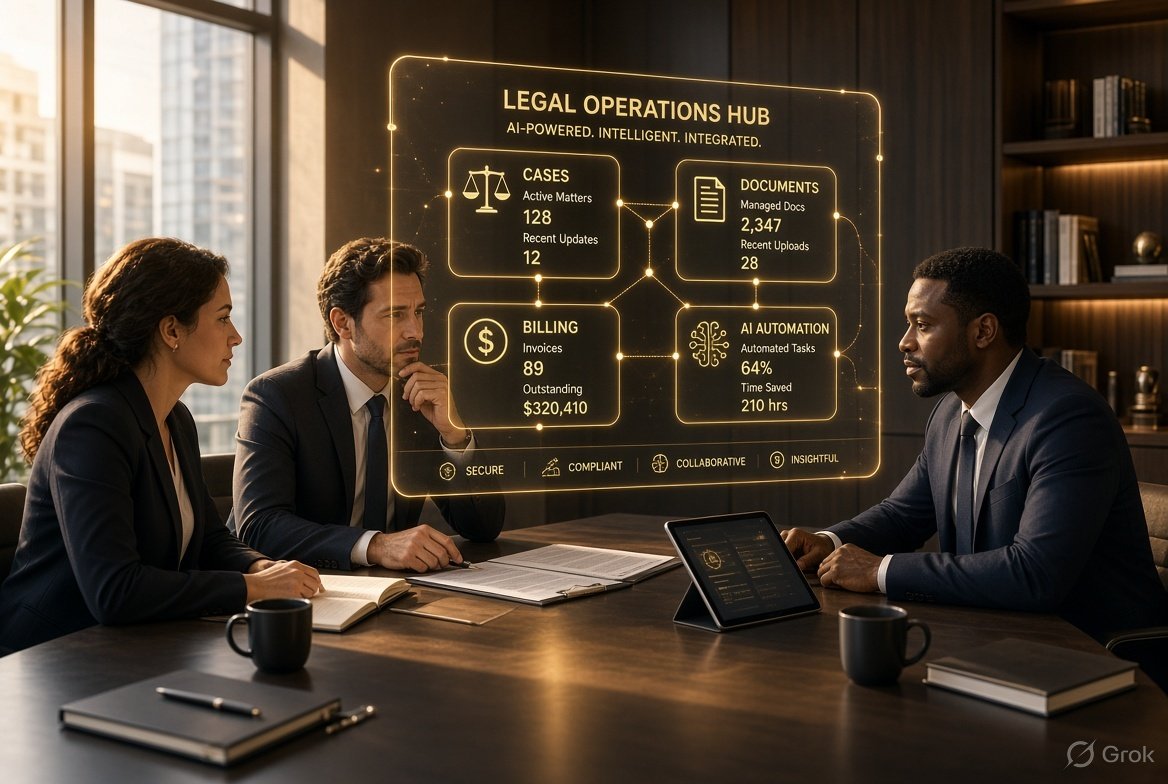
Law firms manage a large volume of sensitive information and interconnected business activities every day. These include client relationships, legal matters, case documentation, court schedules, internal assignments, financial records, and communication between lawyers and administrative teams. Managing these activities through separate systems or manual processes can create operational challenges, increase administrative workloads, and make it difficult to maintain a complete view of ongoing matters.
As law firms grow, their operational requirements become more complex. They need a centralized digital platform that connects different departments, simplifies daily workflows, protects confidential information, and provides reliable access to important records.
CnEL India recognizes the importance of developing enterprise-level software solutions that address these requirements through structured architecture, modular development, and intelligent automation.
This case study explores a requirement for a comprehensive law firm management system. The proposed platform would combine case management, client relationship management, legal document handling, task management, financial administration, reporting, and AI-powered capabilities within one secure web-based application.
The project is not simply about developing a website or a basic record-management application. It requires careful planning, complex business logic, interconnected workflows, secure data management, and an architecture capable of supporting long-term business growth.
Understanding the Project Requirement
The primary objective is to create a centralized management platform that supports the complete operational lifecycle of a law firm.
Different users within a legal organization have different responsibilities. Partners may need access to financial reports and overall firm performance, while lawyers and associates require access to assigned cases, documents, deadlines, and client information. Administrative staff may manage appointments, billing, onboarding, and internal coordination.
The system must accommodate these different requirements without exposing confidential information to unauthorized users.
The proposed solution would bring several important business functions together:
- Case and matter management.
- Client relationship management.
- Legal document management.
- Task and workflow management.
- User, team, and permission management.
- Financial and administrative management.
- AI-powered integrations and automation.
- Reporting and business analytics.
Each module would operate independently where appropriate while sharing relevant information with other parts of the platform.
CnEL India’s approach would focus on developing a unified system in which information flows smoothly between departments and authorized users can complete their responsibilities efficiently.
1. Case and Matter Management
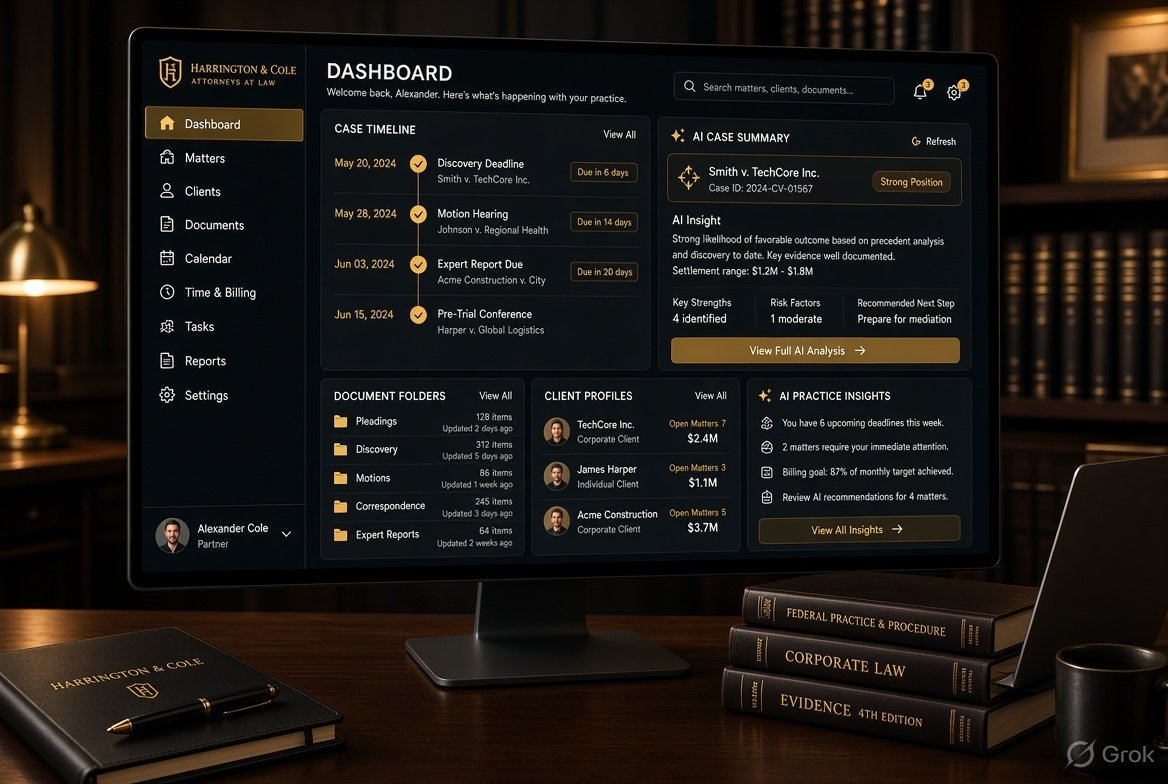
Case management is the central component of a law firm management system. Legal professionals need an organized way to manage cases, monitor progress, track deadlines, and maintain complete histories of legal matters.
A centralized case management module would allow the firm to maintain structured records for every matter.
Case Creation and Tracking
Authorized users would be able to create new case records containing relevant information such as:
- Case title and reference number.
- Client details.
- Case category and description.
- Assigned lawyer or legal team.
- Current status.
- Important dates and deadlines.
- Hearing schedules.
- Related documents and notes.
Each case would have a dedicated information area where authorized users could review its current status and previous activities.
Case Assignment and Team Coordination
Cases may require the involvement of multiple lawyers, associates, and support staff. The platform would support assigning matters to individuals or teams according to their responsibilities.
Partners and administrators could monitor assignments, identify pending work, and review the progress of important matters.
Deadlines and Hearing Management
Missing a legal deadline or overlooking a hearing date can create serious operational problems.
The system would provide calendar-based scheduling, deadline tracking, and automated reminders. Users could receive notifications about upcoming hearings, filing deadlines, and other important activities.
Case History and Activity Records
Every case should maintain a clear history of important updates, communications, notes, and activities.
This would help legal teams understand what has happened, identify pending actions, and maintain continuity when responsibilities change.
The objective is to provide lawyers and administrators with a reliable, organized view of every active legal matter.
2. Client Relationship Management
Client management is another essential component of legal operations. Law firms regularly communicate with existing clients while also handling inquiries from potential clients.
A dedicated client relationship management module would help centralize client information and improve communication tracking.
Client Onboarding
The platform would support the registration of new clients through structured onboarding processes.
Client profiles could include contact details, relevant background information, communication preferences, associated legal matters, and other necessary records.
Authorized staff would be able to review and update client information from a centralized location.
Client Communication History
Communication records are important for maintaining transparency and continuity.
The system would maintain relevant interaction histories, including communication dates, discussion notes, follow-up requirements, and associated case references.
This would help legal teams understand previous conversations without depending on scattered records.
Lead and Potential Client Management
Not every inquiry immediately becomes an active legal matter.
The platform would include a lead management process for tracking potential clients, recording inquiries, assigning follow-ups, and monitoring their progress toward becoming clients.
Secure Client Portal
A secure client portal would allow clients to access information relevant to their legal matters.
Depending on the permissions configured by the firm, clients could review selected case updates, access shared documents, receive notifications, and communicate with authorized representatives.
This would improve communication while reducing the need for repeated manual status updates.
3. Legal Document Management
Legal documentation requires careful organization, reliable access controls, and proper version management.
Law firms handle contracts, agreements, applications, notices, evidence, correspondence, and many other important records. Managing these documents through disconnected folders can make retrieval difficult and increase the risk of errors.
The proposed document management module would provide a centralized environment for organizing legal records.
Document Uploading and Organization
Users would be able to upload documents and associate them with specific clients, cases, or internal activities.
Documents could be organized through categories, labels, dates, reference numbers, and other relevant attributes.
Version Control
Legal documents often go through multiple revisions before reaching their final form.
The system would maintain document versions so authorized users could identify the latest copy and review previous revisions when required.
Access Permissions
Not every employee should have access to every legal document.
The platform would apply permission rules according to user roles, case assignments, and document sensitivity.
This would help protect confidential client information and reduce unauthorized access.
Document Templates and Generation
The system could include reusable templates for commonly prepared legal documents.
Authorized users could select an appropriate template, provide the required information, and generate a structured document.
This would help reduce repetitive administrative work and improve consistency.
Advanced Search and Retrieval
A search facility would allow users to locate documents through relevant keywords, case references, client details, categories, and dates.
The objective would be to make important legal information easier to find without manually checking large numbers of files.
4. Task and Workflow Management
Legal work involves several activities that must be completed in a particular order. A single matter may require document preparation, internal review, approval, client communication, and submission before a deadline.
A workflow management module would help organize these activities.
Task Assignment
Authorized users could create tasks, assign responsibilities, set deadlines, and monitor completion.
Tasks could be associated with individual cases, clients, departments, or internal projects.
Automated Reminders
The system would generate reminders for upcoming deadlines, pending tasks, and important scheduled activities.
Notifications could be configured according to urgency and user preferences.
Approval Workflows
Certain activities may require review or approval before completion.
For example, a document prepared by an associate might need approval from a senior lawyer or partner.
The platform would support structured approval stages, allowing users to submit work for review and track its progress.
Calendar and Scheduling
A centralized calendar would provide visibility into hearings, meetings, appointments, internal deadlines, and assigned activities.
This would help legal teams coordinate their schedules and reduce the possibility of missed commitments.
5. User, Team, and Permission Management
Because the platform would contain confidential legal and financial information, user management and access control would be major architectural priorities.
The system must support different categories of users, including administrators, partners, lawyers, associates, and support staff.
Role-Based Access Control
Each role would receive permissions based on its responsibilities.
For example:
- Administrators could manage users, organizational settings, and system configurations.
- Partners could access relevant case oversight, team performance, and financial information.
- Lawyers could manage assigned cases, documents, and client interactions.
- Associates could access permitted assignments and supporting records.
- Support staff could perform authorized administrative and coordination activities.
Permissions could also be configured at the individual case or document level when necessary.
Team Management
The platform would support creating teams, assigning members, managing responsibilities, and monitoring activities.
This would help larger firms coordinate work across departments and practice areas.
Activity Tracking
Important user activities could be recorded through an audit trail.
This may include document access, record updates, permission changes, case modifications, and other sensitive operations.
Such records can help administrators review system activity and support accountability.
6. Financial and Administrative Management
Financial operations are closely connected with the daily activities of a law firm.
The proposed platform would include a financial management module that connects billing and administrative information with client and case records.
Client Billing and Invoicing
Authorized users would be able to prepare invoices for clients based on relevant legal services and agreed billing arrangements.
Invoices could include service descriptions, billing periods, amounts, taxes where applicable, and payment information.
Time Tracking
Lawyers and other authorized professionals could record time spent on specific cases or activities.
These records could support billing calculations and provide visibility into the time required for different matters.
Expense Management
The system could maintain expense records associated with clients, cases, or internal operations.
Users could record relevant descriptions, dates, amounts, and supporting documents.
Payment Records
The platform would maintain payment information and outstanding balances.
Authorized staff could review invoice statuses, track received payments, and identify pending amounts.
Financial Reporting
Financial dashboards could provide information about billing activity, revenue, outstanding invoices, recorded expenses, and other relevant business indicators.
The objective is to help partners and administrators understand the firm’s financial position through organized information.
7. AI Integrations and Intelligent Automation
One of the most valuable aspects of the proposed platform is the integration of artificial intelligence into legal workflows.
Legal professionals regularly work with large volumes of documents and information. Reviewing these materials manually can consume considerable time, especially when they contain lengthy records or repeated information.
AI-powered capabilities could assist with information processing, document understanding, and internal knowledge retrieval.
Legal Document Analysis and Summarization
The system could provide AI-assisted summaries of uploaded legal documents.
For example, a lawyer reviewing a lengthy document might request a summary of its major sections, important dates, involved parties, and key points.
The generated summary would serve as an assistance feature rather than a replacement for professional legal review.
Intelligent Document Search
Traditional search generally depends on exact keywords or document metadata.
An intelligent search feature could allow authorized users to search using natural language questions.
For example, a lawyer could ask for documents associated with a particular client matter or request information about a specific contractual obligation.
The system could identify relevant records and present the available information with references to the original documents.
AI-Assisted Legal Research
AI-supported research functionality could help legal professionals organize relevant information, identify potentially useful references, and retrieve material from approved internal knowledge sources.
Any research output would require verification against reliable legal sources before being used in professional work.
Information Extraction
Legal documents often contain structured information such as names, dates, reference numbers, payment terms, obligations, and deadlines.
AI-assisted extraction could identify these details and organize them into structured records for review.
This could reduce repetitive data-entry activities.
Intelligent Workflow Automation
AI capabilities could also support routine administrative processes.
Examples include identifying important dates in uploaded documents, suggesting follow-up tasks, categorizing documents, and preparing draft summaries.
The firm would retain control over important decisions and approvals.
Responsible AI Implementation
Legal information is highly confidential. Therefore, AI integrations must be designed with appropriate privacy, access, and data-handling controls.
CnEL India would prioritize authorized data access, secure processing, human review, and transparency about AI-generated information.
AI should assist legal professionals, not independently make legal decisions or replace qualified judgment.
8. Reporting and Business Analytics
A comprehensive management system should provide more than record storage. It should help firm leadership understand operational performance and identify areas requiring attention.
The proposed reporting module would bring information from different platform modules into centralized dashboards.
Case Reports
Partners and authorized users could review active matters, completed cases, pending activities, upcoming hearings, and case progress.
Client Reports
Client-related reports could provide information about onboarding, active relationships, pending follow-ups, and communication activity.
Financial Reports
Financial dashboards could present billing information, payments, outstanding invoices, expenses, and revenue-related indicators.
Operational Reports
Management could monitor task completion, workload distribution, employee activity, and workflow performance.
Custom Filters and Data Visualization
Reports could be filtered by date, team, case category, assigned lawyer, client, or other relevant criteria.
Visual dashboards would make important information easier to understand and compare.
9. Proposed Technology Architecture
Since the project does not require a specific technology stack, CnEL India would recommend selecting technologies according to functional requirements, security needs, expected traffic, integration complexity, and long-term maintenance.
A suitable architecture could include:
- Frontend: A modern component-based web application for responsive dashboards and user interfaces.
- Backend: A structured application layer responsible for business logic, APIs, authentication, and workflow processing.
- Database: A reliable relational database for interconnected records such as clients, cases, users, documents, and financial transactions.
- Background Processing: Separate processing services for notifications, document operations, scheduled activities, and other time-consuming tasks.
- AI Integration Layer: A controlled service layer for connecting approved AI providers and internal knowledge sources.
- Document Storage: Secure storage with access restrictions, backup procedures, and version management.
- Deployment Infrastructure: A scalable production environment supported by automated testing, controlled releases, and monitoring.
The system would be designed using modular architecture principles so individual components could be maintained and expanded without unnecessarily affecting the entire platform.
10. Security, Privacy, and Quality Assurance
Security must be considered throughout the development process rather than added after the application is completed.
The platform would manage sensitive client records, confidential legal documents, and financial information. Therefore, strong protection measures are essential.
The proposed approach would include:
Authentication: Secure user login and appropriate identity verification.
Authorization: Role-based and record-level access restrictions.
Data protection: Appropriate encryption for sensitive information during transmission and storage.
Audit records: Tracking important activities and changes.
Secure document handling: Controlled uploads, downloads, storage, and sharing.
Backup and recovery: Procedures to protect business information and support recovery from unexpected incidents.
Automated testing: Testing important application functions, integrations, permissions, and business workflows.
Performance testing: Evaluating system behavior under different usage conditions.
Documentation: Maintaining technical and operational documentation to support future development.
Security requirements would also need to account for the firm’s jurisdiction, applicable privacy obligations, professional responsibilities, and document-retention policies.
11. Proposed Development Strategy by CnEL India
CnEL India would recommend developing the platform through carefully planned phases rather than attempting to implement every feature simultaneously.
Phase 1: Requirement Analysis and Planning
Understand the firm’s operational processes, user roles, case structures, document requirements, financial workflows, and reporting expectations.
Phase 2: System Architecture and Database Design
Prepare the application architecture, database relationships, security model, integration strategy, and module boundaries.
Phase 3: Core Platform Development
Develop authentication, user management, case management, and client management as the foundation of the application.
Phase 4: Documents and Workflow Development
Implement document storage, version control, task management, calendars, notifications, and approval processes.
Phase 5: Financial and Reporting Modules
Introduce billing, time tracking, expenses, payment records, dashboards, and business reports.
Phase 6: AI Integration
Add document summarization, information extraction, intelligent search, and selected workflow automation after the underlying data and permission structures are established.
Phase 7: Testing and Deployment
Conduct functional, security, integration, and performance testing before production deployment.
Phase 8: Ongoing Support and Improvements
Provide maintenance, performance monitoring, security updates, technical improvements, and additional features as the firm’s needs evolve.
A detailed timeline would be established after requirement discovery, technical planning, and agreement on the initial release scope.
Conclusion
A modern law firm management system must connect legal operations, client relationships, documentation, internal collaboration, financial administration, and intelligent automation within a secure and scalable environment.
The requirement explored in this case study highlights the complexity of building such a platform. It requires more than frontend and backend development; it demands thoughtful architecture, structured data management, strong access controls, reliable workflows, and a clear understanding of how legal teams operate.
For CnEL India, this project represents an opportunity to apply full-stack development, enterprise software engineering, and AI integration capabilities to a specialized business environment.
By following a modular development strategy, prioritizing confidentiality, and introducing intelligent automation where it provides practical value, CnEL India aims to support the development of a comprehensive platform that simplifies law firm operations and creates a strong foundation for future growth.
The ultimate objective is to help legal professionals spend less time managing disconnected administrative processes and more time focusing on their clients, cases, and legal responsibilities.