
Introduction
As digital content continues to become one of the most important ways for businesses and creators to reach their audiences, producing high-quality video content at scale has become a major challenge. Creating every video from scratch requires time, planning, recording, editing, and coordination. When a business wants to test the same message with different audiences or different presenter identities, the amount of work can increase significantly.
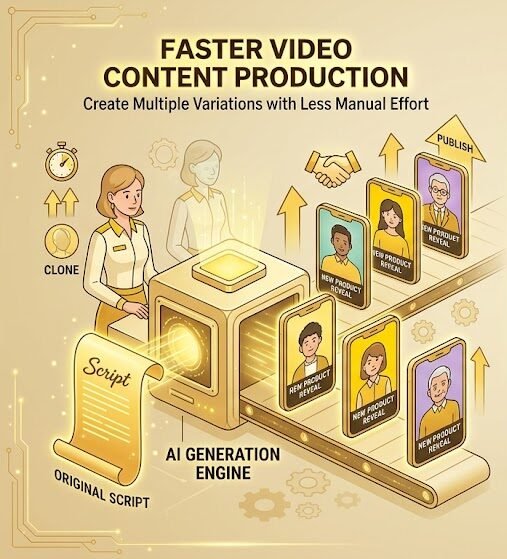
This case study explores how CnEL India can approach a project focused on creating realistic AI-generated video clones for content testing. The objective is to build a system that can take existing video content or scripts and reproduce the core message using different approved digital identities, allowing businesses to test how the same concept performs with different presenters and audiences.
The project combines artificial intelligence, video production, identity-based digital representation, content adaptation, automation, and performance testing into one streamlined workflow.
The focus is not simply on generating synthetic videos. The larger objective is to create a reliable content production system that helps a business experiment faster while maintaining quality, consistency, and appropriate authorization.
Understanding the Client’s Requirement
The client is looking to accelerate a system that can duplicate existing video content using AI-generated digital clones.
The primary objective is to test similar scripts against different identities and audiences without requiring every version to be recorded manually.
For example, imagine a company has developed one promotional script. Instead of producing a single video, the company may want several variations:
- Different presenter identities
- Different speaking styles
- Different audience positioning
- Different visual presentation
- Different introductions
- Different calls to action
The underlying message can remain similar while the presentation changes.
This allows the business to learn which combination of presenter, messaging, and audience positioning creates stronger engagement.
CnEL India’s approach would be to build a structured workflow that makes this experimentation faster and more manageable.
Project Objectives
The project can be organized around several major objectives.
1. Faster Video Production
The first objective is reducing the amount of manual work required to create multiple video variations.
2. Consistent Digital Identities
Each approved digital identity should maintain a consistent appearance, voice characteristics, and presentation style.
3. Script-Based Content Generation
The system should make it easier to take an existing script and produce multiple variations.
4. Audience Testing
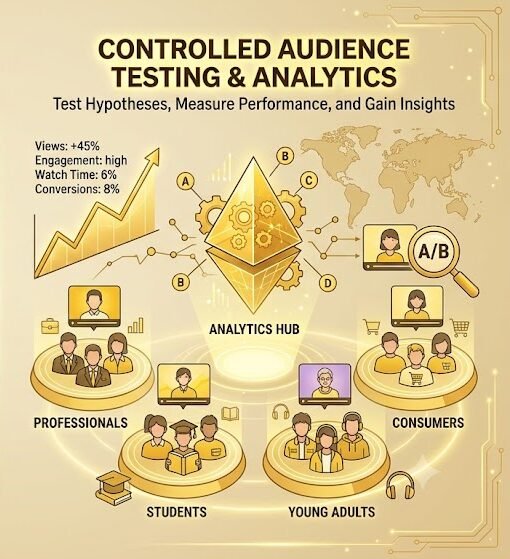
Different versions can be created for different audience groups, markets, or communication styles.
5. Scalable Workflow
The system should be designed so that producing additional content variations does not require rebuilding the entire process.
6. Quality and Realism
The generated videos need to appear professional and natural enough for legitimate testing and publishing.
7. Responsible Identity Usage
Digital clones should only be created and used with appropriate permission from the person represented. This is especially important when content is published publicly or used commercially.
Planning the AI Clone System
Before development begins, CnEL India would first understand how the client currently creates videos.
The discovery process would examine:
- Existing video formats
- Script structure
- Target audiences
- Presenter identities
- Video duration
- Publishing channels
- Desired output quality
- Number of variations required
- Existing content library
- Approval requirements
- Publishing workflow
This information would determine the architecture of the overall system.
Instead of treating every video as an individual project, the objective would be to create a repeatable content pipeline.
A simplified workflow could look like:
Script → Content Adaptation → Approved Digital Identity → Video Generation → Review → Quality Check → Audience Testing → Publishing → Performance Analysis
This structure allows the process to become repeatable.
Building the Digital Identity Framework
The most important part of this project is the digital identity itself.
A digital clone should not simply be a static image or a basic animated character. The objective is to create a convincing digital representation that can deliver approved scripts naturally.
Each identity can have defined characteristics such as:
- Visual appearance
- Voice characteristics
- Speaking pace
- Facial expression
- Presentation style
- Tone
- Background preferences
- Clothing style
- Audience positioning
For example, one approved identity may be positioned as a professional business presenter, while another may have a more casual and approachable communication style.
The system can maintain these identity profiles so that new videos remain consistent.
This becomes particularly useful when the client wants to test different presenters without recording every variation manually.
Script Adaptation
The original video script may not always work equally well for every identity or audience.
For this reason, the system can include a content adaptation stage.
The core message can remain consistent while certain elements are adjusted.
For example:
Original message:
A product solves a specific customer problem.
Audience variation:
The same message can be presented differently to students, professionals, business owners, or consumers.
The wording can be adjusted while preserving the main value proposition.
This allows the client to test not only different identities but also different communication approaches.
CnEL India would focus on maintaining the original meaning while adapting the presentation appropriately.
Creating Multiple Video Variations
Once the script and digital identity are approved, multiple video versions can be generated.
For example, a campaign may contain:
Version A: Professional presenter + business audience
Version B: Friendly presenter + general consumers
Version C: Younger presentation style + younger audience
Version D: Direct presentation + short-form audience
The purpose is not to create random variations.
Each version should represent a specific testing hypothesis.
This makes the results more meaningful because the client can compare different variables rather than simply generating large numbers of unrelated videos.
Maintaining Realistic Video Quality
One of the biggest challenges with AI-generated video content is realism.
Viewers can quickly notice unnatural facial movement, incorrect lip synchronization, robotic speech, inconsistent expressions, or strange visual transitions.
Therefore, quality control is an important part of the workflow.
CnEL India’s process would evaluate areas such as:
- Facial synchronization
- Speech clarity
- Natural expressions
- Voice consistency
- Lighting
- Background quality
- Video resolution
- Timing
- Script pronunciation
- Overall presentation
The objective is to ensure that every video meets a consistent quality standard before being published.
If a generated video does not meet the required quality level, it should go through revision rather than being automatically published.
Content Review and Approval
Because the system involves digital identities and public-facing content, an approval workflow is particularly important.
A generated video should pass through several stages before publication.
Stage 1: Script Approval
The client reviews the script and confirms that the message is correct.
Stage 2: Identity Approval
The selected digital identity is confirmed for the specific campaign.
Stage 3: Video Generation
The system creates the video.
Stage 4: Quality Review
The generated content is reviewed for technical and visual quality.
Stage 5: Client Approval
The final version is approved for publishing.
Stage 6: Publishing
The approved video can then be published through the client’s normal content channels.
This workflow reduces the risk of incorrect or unauthorized content being distributed.
Testing Different Audiences
The central business value of this project comes from testing.
Traditional video production can make experimentation expensive.
Suppose a company wants to test five different presenters with three different scripts. Producing every variation manually would require significant recording and editing resources.
An AI-assisted workflow can reduce the effort required to create these variations.
The company can therefore test questions such as:
- Does a professional presenter generate more engagement?
- Does a friendly presenter create stronger interaction?
- Does a shorter script perform better?
- Does a particular presentation style work better for a specific audience?
- Does changing the introduction improve retention?
- Which message creates more conversions?
The system turns video creation into an experimentation process.
Social Media Content Strategy
The client specifically wants examples of realistic AI-generated clones published in live social media content.
This indicates that the project is not limited to internal experimentation.
The generated videos may eventually be used as public-facing content, subject to the appropriate authorization and platform requirements.
For public publishing, consistency becomes especially important.
The content should maintain:
- Consistent identity
- Consistent visual quality
- Clear messaging
- Appropriate disclosure where required
- Brand consistency
- Audience relevance
CnEL India would treat the publishing stage as part of the overall workflow rather than considering video generation to be the final step.
Performance Measurement
Creating multiple videos is useful only if the client can learn from the results.
Therefore, performance measurement should be included in the project strategy.
Depending on the publishing channel, the client may track metrics such as:
- Views
- Watch time
- Engagement
- Comments
- Shares
- Click-through activity
- Leads
- Conversions
- Audience retention
The data can then be compared between different content variations.
For example, if two videos use the same script but different approved presenters, the client can compare their performance.
This transforms the system from a content-generation process into a data-driven content testing framework.
Automation and Scalability
A major advantage of the proposed system is scalability.
Once the workflow has been established, the client should be able to create additional content without repeating every manual step.
For example:
New Script → Select Identity → Select Audience → Generate Variation → Review → Approve → Publish
This creates a repeatable process.
The system can eventually support a larger library of scripts and approved digital identities.
Instead of treating each new video as a separate development project, the business can operate a reusable content production pipeline.
Challenges and Solutions
Challenge 1: Maintaining Realism
AI-generated presenters can sometimes appear unnatural.
Solution: Establish strict quality standards and review every important output before publishing.
Challenge 2: Identity Consistency
Different videos may accidentally portray the same identity differently.
Solution: Maintain predefined identity profiles and consistent production parameters.
Challenge 3: Script Repetition
Simply changing the presenter may not be enough to create meaningful audience testing.
Solution: Combine identity testing with controlled variations in messaging, introductions, tone, and calls to action.
Challenge 4: Content Authorization
Digital representations of real people require appropriate permission.
Solution: Only use identities for which the client has the necessary rights and approvals, particularly for commercial and public-facing use.
Challenge 5: Scaling Content Review
Producing many variations can make manual review difficult.
Solution: Establish a structured approval pipeline with clear quality checkpoints.
CnEL India’s Approach
CnEL India would approach the project as a complete content system rather than simply a video-generation assignment.
The first stage would involve understanding the client’s existing content and identifying how the current production process can be improved.
Next, the team would define the approved digital identities and establish consistent presentation guidelines.
Scripts would then be organized into reusable formats.
The system could support multiple content variations while maintaining the core message.
Each generated video would pass through quality and approval stages before being considered ready for publication.
As the project develops, the workflow can be expanded to support additional identities, scripts, audiences, and campaigns.
This makes the system suitable not only for a single campaign but also for long-term content experimentation.
Expected Business Impact
The proposed solution can provide several important benefits.
Faster Content Production
Multiple video variations can be produced without recording every version manually.
Reduced Production Effort
The business can reduce repetitive recording and editing requirements.
More Testing Opportunities
The client can test different identities, scripts, and audiences more efficiently.
Consistent Branding
Approved digital identities can maintain a consistent visual and communication style.
Scalable Content Creation
The workflow can support increasing content requirements over time.
Better Decision Making
Performance data can help the business determine which approaches resonate most strongly with its audience.
Conclusion
The AI clone video project represents a shift from traditional one-version video production toward a more flexible and experimental content model.
Instead of recording one video and hoping it performs well, businesses can create controlled variations using approved digital identities and test how different presentations perform with different audiences.
For CnEL India, the project provides an opportunity to combine artificial intelligence, video production, content strategy, automation, and business analytics into one practical solution.
The most important part of the project is not simply making realistic digital presenters. The real value comes from creating a repeatable system for producing, reviewing, testing, and learning from video content at scale.
With proper identity authorization, quality control, human approval, and responsible publishing practices, the system can help businesses experiment with their content more quickly while maintaining a professional standard.
Ultimately, the proposed solution gives the client a scalable framework where one approved concept can become multiple audience-specific video experiences. This can make content testing faster, reduce repetitive production work, and provide valuable insights into which combinations of messaging, presentation, and audience positioning produce the strongest results.