
Introduction
Modern websites and web applications often need continuous improvements after their initial development. Businesses may start with a functional website and later identify new requirements based on customer feedback, operational needs, or changes in business processes. In such situations, rebuilding the entire website is usually unnecessary. A better approach is to carefully understand the existing application and add new features while preserving the functionality that already works well.
CnEL India worked on a project focused on enhancing an existing web application by adding new features to an established codebase. The website had already been developed using a modern web development architecture and was functioning with its existing user interface and business logic. The requirement was to review the existing project, understand how the current functionality worked, and implement additional features without negatively affecting the existing application.
The project required more than simply writing new code. It required careful analysis of the existing structure, understanding how different parts of the application interacted, maintaining the existing design, testing every change, and ensuring that the new functionality integrated naturally with the website.
The goal was to create a smooth development process where new requirements could be introduced without unnecessary changes to the existing system.
Project Background
The client already had a functioning website and did not require a complete redesign or redevelopment. Instead, the business wanted to extend the website with several new features.
Since the existing website was already being used, maintaining its current functionality was an important priority. Any modification to an existing application can potentially affect other parts of the system. A small change in one area can sometimes create unexpected issues elsewhere if the existing structure is not properly understood.
Therefore, the first stage of the project focused on understanding the existing application.
The development team needed to examine the existing structure, identify how pages and components were organized, understand existing functionality, and determine the appropriate places where new features could be introduced.
The project also required communication with the client to clarify feature requirements before implementation. This helped ensure that development work was based on the actual business requirements rather than assumptions.
Understanding the Existing Codebase
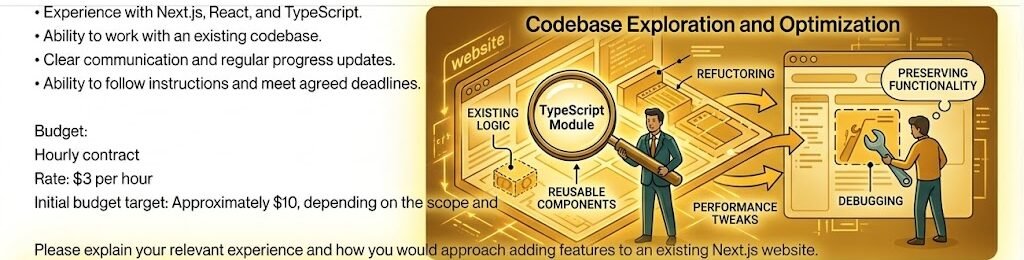
One of the most important parts of this project was reviewing the existing codebase.
When developing a new website from the beginning, developers have complete control over the architecture and structure. Working on an existing application is different. The developer must first understand decisions that have already been made.
CnEL India’s approach began with a structured review of the existing application.
The review focused on understanding:
- Existing page structure
- Application functionality
- Reusable components
- Existing user interactions
- Data flow
- Navigation structure
- Current design patterns
- Existing validation and error handling
- Areas where new features could be integrated
- Potential dependencies between existing and new functionality
This review helped establish a clear picture of the application before any major changes were introduced.
Understanding the existing structure also reduced the possibility of unnecessarily modifying working sections of the website.
Feature Requirement Analysis
After reviewing the existing application, the next step was to understand the new feature requirements.
Feature development becomes much more effective when requirements are clearly defined before implementation. Even a seemingly simple feature can have multiple possible behaviors depending on the user’s expectations.
CnEL India focused on clarifying the requested functionality with the client before development.
Important questions included:
- What should the new feature accomplish?
- Where should the feature appear?
- Who should be able to use it?
- How should users interact with it?
- What information should be displayed?
- What should happen after an action is completed?
- How should errors or invalid inputs be handled?
- Should the existing design remain unchanged?
- Are there any existing features that the new functionality depends on?
This process helped convert general requirements into clear development tasks.
Breaking the project into smaller requirements also made it easier to estimate development effort and track progress.
Maintaining the Existing User Interface
Another major requirement was to maintain the current user interface and design unless changes were specifically necessary.
For an existing website, visual consistency is extremely important. Users are already familiar with the existing navigation, layouts, buttons, forms, and interaction patterns. Introducing unnecessary design changes can create confusion and reduce usability.
CnEL India therefore focused on integrating new functionality within the existing visual structure.
New features were planned to follow the website’s existing design language, spacing, layout patterns, typography, navigation behavior, and interaction style.
This approach helped ensure that users could access the new functionality without feeling that they had entered a completely different part of the application.
The objective was not simply to make the new features work, but to make them feel like a natural part of the existing website.
Feature Implementation
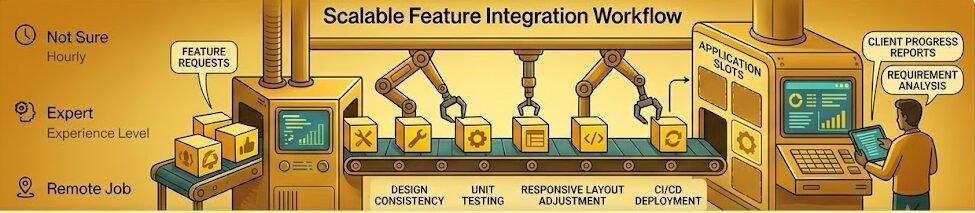
Once the requirements and existing architecture were understood, development could begin.
The implementation process focused on making targeted changes rather than modifying unrelated parts of the application.
Wherever possible, existing reusable components and established development patterns could be followed. This reduced duplication and helped maintain consistency throughout the application.
The development approach included:
- Identifying the appropriate location for each feature.
- Reviewing related existing functionality.
- Planning how the new functionality would interact with existing components.
- Implementing the required changes.
- Connecting the new functionality with the relevant application logic.
- Maintaining existing layouts and interaction patterns.
- Handling expected user actions and edge cases.
- Reviewing the changes for potential impact on existing features.
This controlled approach was particularly important because the project involved modifying a live, already-developed application.
Protecting Existing Functionality
One of the biggest challenges in feature enhancement is avoiding unintended side effects.
When a developer modifies existing code, there is always a possibility that another feature could stop working. For example, changes to a shared component can affect multiple pages, while changes to application logic can influence several user flows.
CnEL India treated existing functionality as an important part of the project scope.
Before making changes, related functionality was reviewed to understand possible dependencies. After implementation, affected areas were tested again to confirm that existing behavior remained stable.
The objective was to make the smallest necessary changes required to deliver the requested functionality.
This principle helped reduce unnecessary risk and made the development process more controlled.
Responsive and User-Friendly Development
New functionality should work naturally across the different devices and screen sizes supported by an existing website.
Since users may access a web application from desktops, laptops, tablets, or mobile devices, newly introduced features need to respect the application’s existing responsive behavior.
CnEL India’s development approach considered how new elements would fit into existing layouts and user flows.
The team focused on maintaining:
- Clear navigation
- Consistent spacing
- Usable forms and controls
- Readable content
- Logical interaction flows
- Responsive layouts
- Consistent visual behavior
The goal was to ensure that new functionality improved the application without creating usability problems.
Testing and Quality Assurance
Testing was an essential part of the project because the website already contained working functionality.
After implementing the requested changes, the updated areas needed to be tested carefully.
Testing focused on both the new functionality and the existing features that could potentially be affected by the changes.
The testing process included checking:
- New feature functionality
- User interactions
- Navigation
- Forms and inputs
- Expected and unexpected user actions
- Existing pages
- Related functionality
- Responsive behavior
- Error scenarios
- Overall application stability
If an issue was identified, the relevant implementation was reviewed and corrected.
This helped ensure that the final changes were not only functional but also reliable within the existing application environment.
Debugging and Issue Resolution
Feature development rarely ends with the first implementation. Testing can reveal unexpected behavior, especially when new functionality interacts with an existing system.
CnEL India followed a structured approach to identifying and resolving such issues.
When an issue occurred, the team reviewed the affected functionality, identified the source of the problem, and made the necessary correction without introducing unnecessary changes elsewhere.
This approach helped keep debugging focused and reduced the possibility of creating additional problems.
The emphasis was on resolving issues at their source rather than applying temporary workarounds.
Communication and Progress Updates
Clear communication was another important requirement of the project.
Because the work involved an existing website and a limited initial development scope, keeping the client informed about progress was valuable.
CnEL India maintained a communication-focused workflow in which requirements, questions, progress, and completed work could be discussed clearly.
Regular updates helped the client understand:
- What had been reviewed
- Which features were being worked on
- Whether clarification was required
- What had been completed
- Whether any issues were identified
- What remained to be addressed
This made the development process more transparent and reduced misunderstandings.
Managing a Small Initial Scope
The project was structured as an hourly engagement with a small initial budget based on the expected scope of work.
This required efficient development and careful prioritization.
Instead of spending unnecessary time changing unrelated areas, the focus remained on understanding the requested requirements and delivering the most important functionality within the agreed scope.
For small enhancement projects, this type of focused approach can provide significant value because businesses can improve an existing application without committing to a complete redevelopment.
It also allows the client to evaluate the quality of the development work before expanding the project to additional features.
Documentation and Completion Summary
After completing the requested changes, providing a brief summary of the work was another important part of the project.
A clear completion summary helps the client understand what was changed and provides a useful reference for future maintenance.
The summary can include:
- Features added
- Existing areas modified
- Important functionality updated
- Testing completed
- Issues resolved
- Any relevant follow-up recommendations
This creates better visibility into the development work and makes future updates easier to manage.
Challenges
The primary challenge of this project was working within an existing application rather than starting from scratch.
The development team had to understand the existing architecture before making changes. This required careful analysis and attention to dependencies.
Another challenge was maintaining the existing user interface. New functionality needed to be integrated without introducing unnecessary visual changes.
Protecting existing functionality was also important. Since multiple areas of an application can depend on shared components and logic, every modification needed to be considered carefully.
Finally, the limited initial scope required efficient planning so that development time was focused on the highest-priority requirements.
CnEL India’s Approach
CnEL India follows a practical approach when enhancing existing web applications.
The process begins with understanding rather than immediately changing the code. The existing application is reviewed, requirements are clarified, and the impact of proposed changes is considered.
The overall approach can be summarized as:
Review → Understand → Plan → Implement → Test → Fix → Deliver
This process helps ensure that feature development remains controlled and aligned with the client’s requirements.
CnEL India focuses on preserving working functionality while making targeted improvements. The objective is to deliver useful enhancements without creating unnecessary complexity.
Business Value
Adding new features to an existing website can provide significant business value.
Instead of rebuilding an entire application, businesses can extend what they already have. This can reduce development effort, minimize disruption, and allow improvements to be delivered more quickly.
A carefully implemented feature enhancement can also improve the user experience, support new business requirements, simplify workflows, and extend the useful life of an existing application.
For the client, the project provided a structured approach to improving their existing website while maintaining its established functionality and design.
Conclusion
This project demonstrates the importance of careful development when working with an existing web application.
Adding features is not simply about writing new functionality. It requires understanding the current system, clarifying requirements, respecting the existing design, protecting established features, testing changes, and communicating progress clearly.
CnEL India’s approach focused on making targeted improvements while keeping the existing application stable and familiar to its users.
By following a structured process of review, planning, implementation, testing, and refinement, the project provided a practical way to extend an existing website without unnecessary redevelopment.
The result is a development approach that allows businesses to continue improving their digital products while protecting the investment already made in their existing applications.