
Project Overview
CnEL India worked on an early-stage software product development project for a client who had a software idea and needed an experienced development partner to transform that concept into a functional prototype.
At the beginning of a software product journey, an idea can often be clearly understood from a business perspective but still lack the technical structure required to turn it into a working product. The challenge is to take the original concept, understand the intended users and business value, define the essential functionality, and build a prototype that demonstrates how the product would actually work.
The objective of this project was therefore not to immediately build a large-scale production application with every possible feature. Instead, CnEL India focused on developing a practical prototype that could validate the core concept, demonstrate the intended user experience, and provide a foundation for future product development.
The project followed an idea-to-prototype approach involving requirement discovery, product planning, user-flow design, interface development, functional implementation, testing, refinement, and preparation for future scalability.
Business Challenge
The client had a software product idea but needed technical expertise to convert the concept into something tangible.
This is a common challenge for early-stage product owners. An idea may describe what the product should accomplish, but several important questions still need to be answered.
What should the first version actually include?
Who will use it?
What problem should it solve first?
Which features are essential?
What should the user experience look like?
How should information move through the application?
Which functionality can be postponed until later?
Building every possible feature at the beginning can increase development time, cost, and complexity. On the other hand, creating an overly simple prototype may not demonstrate enough of the product’s value.
CnEL India therefore focused on identifying the minimum set of functionality needed to demonstrate the core product concept effectively.
Project Objectives
The main objectives of the project were:
- Understand the client’s software idea.
- Convert the idea into a structured product concept.
- Identify the most important user journeys.
- Define the essential prototype features.
- Create a clear application structure.
- Develop an intuitive user interface.
- Implement the core functionality.
- Demonstrate the intended product workflow.
- Test the prototype from a user perspective.
- Identify areas requiring refinement.
- Create a foundation for future development.
- Keep the initial product focused and practical.
The overall goal was to move the project from an idea stage toward a working software concept that could be demonstrated, tested, and improved.
Understanding the Product Idea
The first stage involved understanding the client’s vision.
CnEL India worked through the idea from both business and technical perspectives.
Instead of immediately beginning development, the concept was broken down into its major components.
The team considered the problem the product was intended to solve, the expected users, the main actions users would perform, the information required by the system, and the expected outcome of each user interaction.
This helped convert a high-level idea into a more structured product definition.
The process also helped distinguish between essential features and features that could be introduced later.
This distinction was particularly important for prototype development.
Defining the Minimum Viable Prototype
A prototype should demonstrate the product’s most important value without becoming unnecessarily complex.
CnEL India therefore identified the core functionality required to demonstrate the concept.
The initial version focused on the primary user journey rather than secondary features.
For example, if the product required users to enter information, process that information, and receive a meaningful result, the prototype needed to demonstrate that complete journey.
This provided a much stronger demonstration than developing several disconnected screens.
The prototype was therefore designed around a complete functional flow.
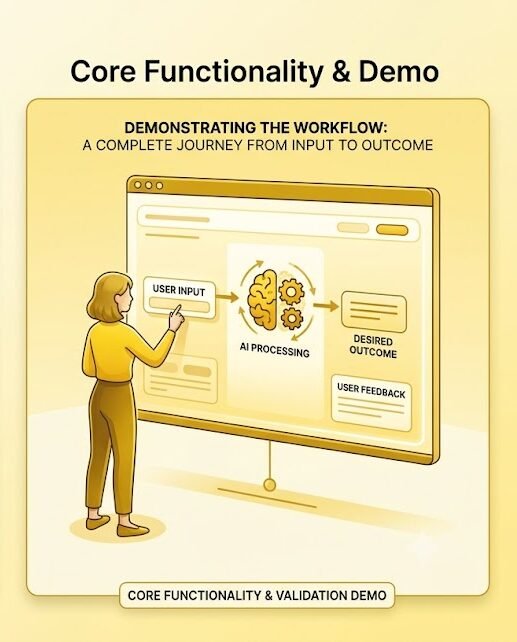
User Input → Processing → System Response → User Action → Desired Outcome
This structure allowed the client to see how the proposed product could operate in a real-world scenario.
Product Architecture
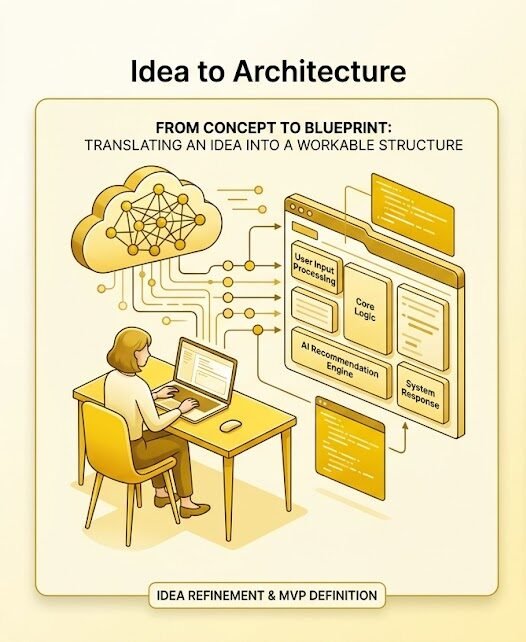
Once the core requirements were established, CnEL India created a logical application structure.
The prototype was divided into different functional areas so that each component had a clear responsibility.
The architecture considered:
- User interaction.
- Data input.
- Data processing.
- Application logic.
- Information storage.
- System responses.
- User feedback.
- Future expansion.
Even though the project was focused on a prototype, the underlying structure was planned with future development in mind.
This reduced the risk of creating a prototype that would need to be completely rebuilt if the client decided to move forward with the full product.
User Experience Design
A software product can have strong functionality but still fail to create value if users cannot understand how to use it.
CnEL India therefore placed significant importance on the user experience.
The interface was designed around the user’s expected journey rather than around technical implementation.
Important actions were made easy to identify.
Information was organized logically.
The number of unnecessary steps was reduced.
The interface also provided appropriate feedback when users completed an action or encountered an issue.
The goal was to make the prototype feel like a real product rather than a collection of technical screens.
Interface Development
After defining the user experience, CnEL India developed the primary application screens.
The interface focused on clarity, consistency, and usability.
Common elements were structured consistently throughout the application so users could understand the interface without learning a different interaction pattern on every screen.
The visual hierarchy helped users identify:
- Primary actions.
- Supporting information.
- Input areas.
- Results.
- Navigation options.
- System messages.
This helped establish a professional foundation for the product.
Core Functionality Development
The next stage involved implementing the product’s primary functionality.
CnEL India focused on making the main user journey operational.
This included handling user inputs, processing information, applying the required application logic, and returning useful results.
The development approach was iterative.
Instead of waiting until the end of the project to test the complete application, individual components were reviewed as they were implemented.
This made it easier to identify issues early and refine the functionality before moving to the next stage.
Data Management
Many software products depend on structured information.
The prototype therefore considered how user information and application data would be handled.
The data structure was organized to support the core functionality while maintaining flexibility for future product expansion.
The development approach considered:
- Data organization.
- Input validation.
- Data consistency.
- Information retrieval.
- Updating existing information.
- Error handling.
- Future data expansion.
Even at the prototype stage, maintaining organized data structures is important because poor data organization can create significant development problems later.
Intelligent Product Functionality
Because the project involved an AI-focused development requirement, intelligent functionality was considered as part of the product experience where appropriate.
The purpose was not to add AI simply because it was technically possible.
Instead, intelligent functionality needed to support the product’s actual purpose.
Depending on the specific product concept, this could involve understanding user input, generating relevant responses, classifying information, assisting users with decisions, automating repetitive processing, or producing useful recommendations.
The prototype approach focused on demonstrating the value of the intelligent component clearly.
Users needed to understand what the system was doing and how the intelligent functionality contributed to the overall product.
Prototype Demonstration
One of the most important outcomes of the project was creating a prototype that could be demonstrated to stakeholders.
A functional demonstration provides significantly more insight than a written product description.
The client could observe the intended workflow, interact with the interface, test the main functionality, and identify areas where the concept could be improved.
This also made it easier to communicate the product vision to potential stakeholders, investors, partners, or future development teams.
Testing and Quality Assurance
Testing was performed throughout the development process.
The prototype was reviewed from both technical and user perspectives.
Functional testing focused on whether the main workflows behaved correctly.
User-focused testing examined whether the interface was understandable and whether users could complete the intended tasks without unnecessary confusion.
Testing included:
- Input validation.
- Main user workflows.
- Data handling.
- Application responses.
- Error scenarios.
- Navigation.
- Interface consistency.
- Responsive behavior.
- Performance of core functions.
Potential issues were identified and corrected before the prototype was considered ready for demonstration.
Handling Errors and Unexpected Inputs
Real users do not always follow the expected path.
They may enter incomplete information, provide invalid values, repeat an action, or attempt an operation in an unexpected order.
CnEL India therefore considered common error scenarios while developing the prototype.
The application was designed to provide meaningful feedback rather than leaving users uncertain about what went wrong.
This helped improve the overall reliability of the prototype.
Error handling was also important for future development because it established patterns that could later be expanded as the product became more sophisticated.
Iterative Development
Prototype development is rarely a straight-line process.
As the client interacts with the product, new ideas and improvements often emerge.
CnEL India used an iterative approach that allowed the prototype to evolve based on feedback.
The process followed a cycle of:
Build → Test → Review → Refine → Demonstrate → Improve
This approach reduced the risk of spending significant resources developing functionality that did not match the client’s expectations.
It also allowed the product vision to become clearer through actual interaction with the prototype.
Business Validation
A working prototype can help answer important business questions before a full product is developed.
The client could evaluate whether the core concept made sense, whether the user journey was intuitive, whether the main functionality delivered the intended value, and which features should receive priority in the next development phase.
This helped shift product planning from assumptions toward practical validation.
The prototype could also be used to gather feedback from potential users and stakeholders.
Business Benefits
The project delivered several important benefits.
Faster Transition From Idea to Product
The client moved from a conceptual software idea toward a working prototype.
Clearer Product Vision
The development process helped convert abstract requirements into actual user flows and application functionality.
Reduced Development Risk
Testing the core concept before building a full-scale product helped identify potential issues earlier.
Better Stakeholder Communication
A working prototype provided a practical way to demonstrate the product concept.
Foundation for Future Development
The prototype created a starting point for expanding the application into a more complete product.
Improved Feature Prioritization
The prototype made it easier to determine which features were essential and which could be introduced later.
User-Centered Product Development
The application was designed around the intended user journey rather than purely technical requirements.
CnEL India’s Contribution
CnEL India acted as a development partner throughout the idea-to-prototype process.
The focus was not simply on writing application code.
The team helped translate the client’s product vision into a structured software concept, identify the core functionality, establish user workflows, develop the interface, implement the main logic, test the prototype, and prepare it for further development.
This approach was particularly valuable because early-stage software projects often change as the product becomes more clearly defined.
CnEL India’s iterative development approach allowed the prototype to remain flexible while still maintaining a clear technical structure.
Future Scalability
The prototype was designed with the possibility of future expansion.
Once the core concept is validated, additional functionality can be introduced in phases.
Future development may include additional user roles, advanced data processing, expanded intelligent capabilities, dashboards, analytics, integrations, automation, subscription functionality, enhanced security, and larger-scale infrastructure.
The phased approach allows the product owner to prioritize development according to customer feedback and business requirements.
Instead of trying to build everything at once, the product can evolve based on actual market validation.
Conclusion
The AI Coding Specialist project demonstrates how CnEL India can help transform a software idea into a functional and demonstrable prototype.
The project began with a simple concept: a client had an idea for a software product and needed a development partner to bring that idea to life.
CnEL India’s approach focused on understanding the business problem, defining the core product, identifying the most important user journey, developing a practical prototype, testing the functionality, and creating a foundation for future growth.
The result was more than an early technical demonstration. The prototype became a way to validate the product concept, communicate the vision, gather feedback, and establish a clear direction for future development.
For entrepreneurs and businesses with software ideas, starting with a focused prototype can be an effective way to reduce risk, understand the market, and determine which features deserve investment.
CnEL India provides the technical and product-development support needed to move from idea → prototype → validation → scalable product, helping businesses turn early concepts into practical digital solutions.