
Introduction: Building Connected Systems for Smarter Business Operations
Modern businesses rely heavily on multiple digital platforms to manage operations, customer interactions, reporting, and decision-making. However, when these systems operate separately without proper integration, businesses often face delays, duplicate work, data inconsistencies, and reduced productivity.
This was the exact challenge faced by our client.
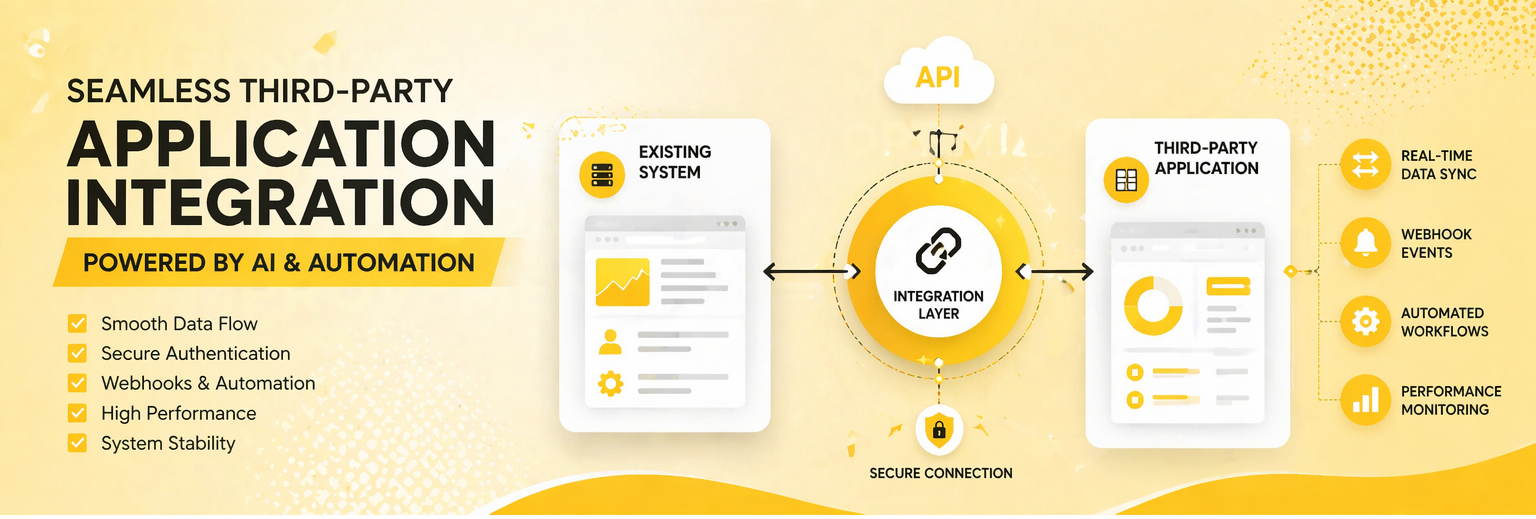
The client required an experienced AI Senior Developer to integrate a third-party application into their existing system. The objective was not only to connect two platforms but to ensure smooth communication, secure authentication, reliable data flow, and long-term system stability.
This case study explains how CnEl India successfully delivered a complete third-party application integration supported by intelligent automation, creating a faster, more reliable, and scalable business environment.
The project focused on reducing manual operations, improving workflow efficiency, and building a future-ready digital ecosystem.
Client Background
The client operated a growing business that relied on multiple digital systems for managing internal workflows, customer records, operations, and reporting.
Their existing platform handled core business processes effectively, but one major challenge remained: a critical third-party application was operating separately, creating operational inefficiencies.
Because these systems were disconnected, employees had to manually transfer information between platforms, leading to:
- Repetitive administrative work
- Delayed data updates
- Human errors
- Inconsistent reporting
- Reduced operational visibility
The business needed a centralized and automated solution.
Their goal was clear:
Create a seamless connection between the third-party application and the existing system while maintaining security, speed, and performance.
Core Challenges
Although API integration may sound straightforward, enterprise-level integrations involve significant technical and strategic complexity.
The major challenges included:
1. System Compatibility Issues
The third-party application had a different structure, requiring careful mapping to ensure both systems could communicate effectively.
2. Authentication and Secure Access
The integration required secure authentication handling without compromising sensitive business data.
3. Real-Time Data Synchronization
The client needed reliable and timely data transfer without delays or duplication.
4. Webhook Management
Real-time event triggers needed to work accurately for notifications, updates, and workflow execution.
5. Performance Stability
The integration had to work without slowing down the existing platform or affecting daily operations.
6. Future Scalability
The solution needed to support future updates, additional automations, and platform expansion.
The project required more than technical development—it required strategic system architecture.
CnEl India’s Strategic Approach
At CnEl India, we believe integrations should not simply connect systems—they should improve business intelligence and operational efficiency.
For this project, we followed a structured integration methodology built around:
Analyze → Connect → Automate → Optimize → Scale
This ensured the integration delivered immediate operational value while supporting long-term growth.
Our focus was on:
- Stability over quick fixes
- Automation over manual dependency
- Security over convenience
- Scalability over temporary solutions
This mindset shaped the entire project.
Phase 1: Deep System Analysis
Before writing any integration logic, we conducted a full analysis of both platforms.
This included:
- Understanding the existing system architecture
- Reviewing third-party application capabilities
- Identifying API endpoints and access structure
- Mapping business workflows affected by the integration
- Defining critical data transfer paths
- Identifying risk areas for security and performance
This discovery phase helped us avoid implementation mistakes and created a clear technical roadmap.
Understanding the business process was more important than simply connecting APIs.
Phase 2: Secure Authentication Architecture
Security was a top priority because sensitive operational and customer data was involved.
We designed a secure authentication flow that ensured:
- Protected API access
- Safe credential management
- Token-based session handling
- Controlled permission access
- Secure request validation
This prevented unauthorized access while maintaining smooth system communication.
Trust in integrations starts with secure architecture.
Phase 3: Data Mapping and Flow Design
One of the most important steps was ensuring both systems understood each other.
Different platforms often use different data structures, naming conventions, and workflows.
We created a structured data mapping system for:
- Customer records
- Transaction updates
- Status changes
- Notifications
- Reports and activity logs
This ensured accurate, clean, and consistent information exchange.
Bad integrations create data confusion. Good integrations create clarity.
Phase 4: Real-Time Webhook Implementation
To eliminate delays, webhook-based event communication was implemented.
This allowed the system to:
- Trigger instant updates
- Respond to important changes immediately
- Reduce manual intervention
- Improve automation accuracy
- Support faster operational decisions
Examples included:
- Status change notifications
- Customer activity updates
- Approval process triggers
- Task creation workflows
Real-time communication improved both speed and reliability.
Phase 5: Intelligent Workflow Automation
The biggest business value came from automation.
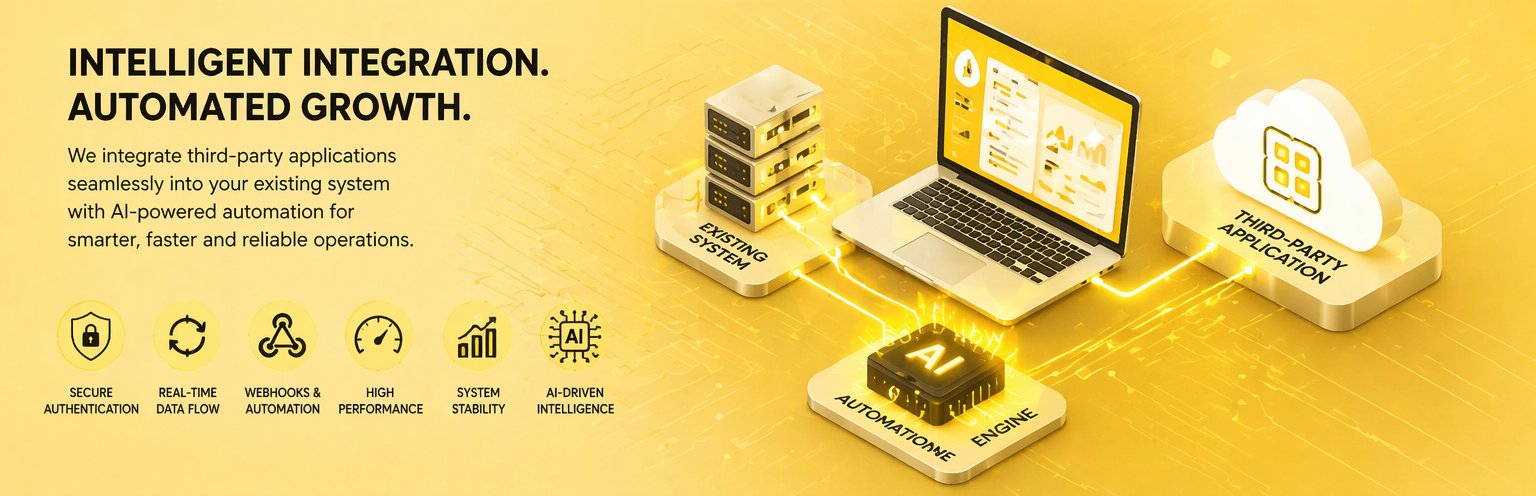
Instead of only transferring data, we created logic-driven automated workflows.
This included:
Automated Task Handling
Tasks were triggered automatically based on system events.
Smart Notifications
Relevant teams received updates without manual follow-up.
Approval Flow Automation
Certain operational approvals were triggered and tracked automatically.
Error Detection Alerts
System exceptions were identified and escalated faster.
Data Sync Validation
Duplicate entries and missing updates were minimized automatically.
This significantly reduced operational dependency on manual processes.
Automation is where integration becomes transformation.
Phase 6: Performance Optimization
Many integrations fail because they affect platform speed and reliability.
We carefully optimized:
- API request efficiency
- Background processing logic
- Webhook response handling
- Queue management for high-volume operations
- Retry mechanisms for failed requests
- System resource utilization
The goal was to ensure the platform became smarter—not slower.
Performance is part of user experience.
Phase 7: Testing and Validation
Before deployment, extensive testing was performed across all scenarios.
We validated:
- Authentication stability
- Data consistency
- Webhook accuracy
- Failure handling
- High-volume performance
- Security controls
- User workflow continuity
Both technical validation and business process validation were critical.
A successful integration must work in real operations—not just in development.
Phase 8: Deployment and Live Monitoring
The final deployment followed a controlled production strategy.
This included:
- Safe rollout planning
- Backup and rollback preparation
- Live environment monitoring
- Performance observation
- Log tracking and issue prevention
- Team support during go-live
This minimized risk and ensured business continuity.
Smooth deployment is part of professional delivery.
Results and Business Impact
The integration delivered measurable operational improvements across the business.
1. Major Reduction in Manual Work
Employees no longer needed to transfer information manually between systems.
This saved time and reduced operational overhead.
2. Faster Decision-Making
Real-time data synchronization improved visibility across departments.
Leaders could make decisions based on current information rather than delayed updates.
3. Improved Data Accuracy
Automated synchronization reduced human errors and inconsistencies.
This improved reporting reliability and operational confidence.
4. Better Team Productivity
Staff could focus on higher-value work instead of repetitive administrative tasks.
This improved both efficiency and morale.
5. Stronger System Reliability
The integration created stable and dependable workflows that supported business growth.
6. Future-Ready Infrastructure
The platform was now prepared for future automations, new integrations, and operational expansion.
What Made This Project Different
Many integration projects focus only on technical delivery.
This project focused on business transformation.
What made CnEl India different:
- Strategy before development
- Security-first implementation
- Business workflow understanding
- Automation-focused architecture
- Long-term scalability planning
- Performance-driven optimization
We did not just connect systems—we improved how the business operates.
Key Lessons from the Project
This project reinforced several important principles:
Integration Should Solve Business Problems
Technology must improve operations, not just add complexity.
Security Cannot Be an Afterthought
Authentication and access control must be built from the beginning.
Real-Time Systems Improve Business Confidence
Faster data leads to better decisions.
Automation Creates True ROI
Manual reduction is where integrations generate real value.
Scalability Must Be Planned Early
Future growth depends on strong system foundations.
Long-Term Value Delivered
The client now benefits from:
- Connected digital operations
- Reduced manual dependency
- Stronger reporting accuracy
- Faster business workflows
- Scalable integration architecture
- Improved operational control
- Future-ready automation capabilities
The system moved from fragmented operations to intelligent connectivity.
Conclusion
Third-party application integration is not just about APIs—it is about creating business continuity, reliability, and growth.
Through structured planning, secure development, and intelligent automation, CnEl India Private Limited successfully transformed disconnected systems into a unified operational ecosystem.
This case study demonstrates that the best integrations are not the ones users notice—they are the ones that quietly remove friction, improve decisions, and make business feel effortless.
Because when systems work together, businesses grow faster.